
[Hebei Shijiazhuang]: Head from the departure point to Shijiazhuang in Hebei Province.
Arrive in Shijiazhuang, Hebei.
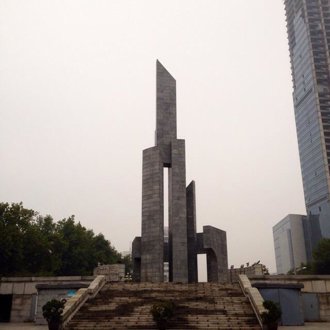
[Liangzhuang Tunnel Battlefield] (approx. 1.5 hours): The Liangzhuang tunnel war was an anti-Japanese movement during the World War II era in the North China Plain, known for its complex tunnel system that resembled an underground maze. It stands as a testament to the courageous deeds of the local people who fought against the Japanese invaders. Visitors can explore the tunnels to experience the hardships and ingenuity of the war effort firsthand. The on-site memorial museum features a vast collection of historical documents, photographs, and materials that provide a comprehensive overview of the war's historical context, battle progression, and monumental significance.
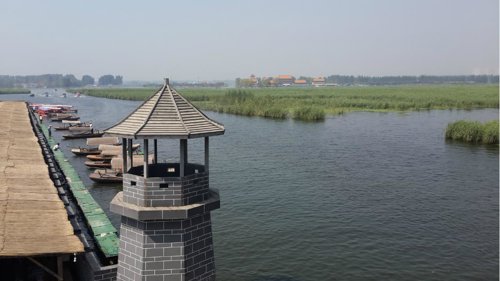
After breakfast, proceed by car for approximately 1.5 hours to tour the [Baiyangdian Scenic Area]. Baiyangdian is the largest freshwater lake in northern China, featuring a vast aquatic landscape of rivers, marshes, and reeds scattered like stars across the expanse, earning it the nickname "The Pearl of the North." The area is rich in aquatic products such as fish, shrimp, mussels, and clams, and serves as a paradise for birds, where numerous migratory species rest and breed. Visitors can take a boat tour to navigate through the reed clusters, enjoy the rural water scenery, experience local customs, and visit the Baiyangdian Cultural Garden to learn about the area's history, culture, and folk traditions.
After lunch, travel by car for 1.5 hours to visit the [Zhili General Governor's Office] (approx. 1.5 hours). This site is one of the best-preserved provincial government building complexes from the Qing Dynasty and served as the office and residence for the highest administrative official of the Zhili Province (covering present-day Hebei, Beijing, and Tianjin) – the Zhili General Governor. Originally built during the Hongwu reign of the Ming Dynasty, it was extensively repaired and expanded during the Qing Dynasty, giving it a history of over 600 years. The complex witnessed the rise and decline of the Qing Dynasty, and many significant historical events and figures are associated with it, including former officials such as Zeng Guofan and Li Hongzhang. Often described as "one half of Qing Dynasty history," the site offers a unique insight into Qing bureaucratic culture and architectural art, providing a window into the transformation of modern Chinese history.
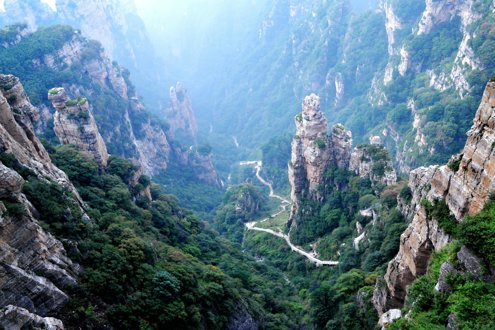
[Taitian Shihua & White Stone Mountain] (approx. 5 hours): After breakfast, depart by coach (approx. 2.5 hours) to White Stone Mountain (Baiyunshan), a UNESCO World Geopark, National Geopark, and National 5A-rated Scenic Area. Known as the 'First Peak of Taitian,' this site is the only white marble geological landscape in China featuring the uniqueness of Mount Huang, the danger of Mount Hua, and the grandeur of Zhangjiajie. The main peak reaches 2,096 meters, with a landscape of three peaks, six terraces, nine gorges, and 81 summits. The terrain is rugged and mysterious, with lush forests, deep gorges, and frequent occurrences of 'Buddha's Light' cloud effects. It is one of the biodiversity centers in North China.
[White Stone Mountain Glass Skywalk]: Experience China's longest, widest, and highest-altitude (up to 1,900m) hanging glass walkway. The structure is 95 meters long and 2 meters wide, utilizing a concrete framework with double-layer laminated glass (3.2mm thick) integrated with stainless steel reinforcement. Each square meter can support a load of 1,000 kg, ensuring high safety standards.
[Return to Baoding]: After the tour, return by coach (approx. 2.5 hours) to Baoding and check in at the hotel.
[Xibaipo Revolutionary Site] (approx. 3 hours): After breakfast, drive approximately 3 hours to Xibaipo, a sacred revolutionary site. Visit the Xibaipo Exhibition Hall, themed “New China Began Here.” The exhibition uses time as its main axis and highlights major events across 12 halls, showcasing a large number of exhibits that systematically reflect the revolutionary activities of the Central Committee of the Communist Party of China (CPC) and its leaders during their time at Xibaipo. From this small mountain village, the Party Central Committee launched its “March to Beijing” campaign. Tour the Old Residences of the CPC Central Committee: this site perfectly preserves the former residences of the five key Secretariat members—Mao Zedong, Liu Shaoqi, Zhu De, Zhou Enlai, and Ren Bisheng—as well as venues for the Second Plenary Session of the Seventh Central Committee, the September Meeting, and the Military Commission War Room. These 13 historic sites, accompanied by a vast collection of documents, literature, photographs, and materials, vividly recreate the atmosphere of the CPC Central Committee’s last rural command post. They carry the rich historical memory of the first generation of proletarian revolutionaries, represented by Mao Zedong, who fought and lived in Xibaipo, conveying significant historical information and educational value.
[Guangfu Ancient City] (approx. 3.5 hours): After lunch, drive about 3.5 hours to Guangfu Ancient City in Yongnian County, Kaifeng, a 5A-rated scenic area with over 2,600 years of history. In the late Sui and early Tang dynasties, King Yu of Xu and Liu Heiqian, King of Han Zhong, established capitals here. It served as the administrative center for successive dynasties. The site features magnificent ancient city walls; the elegant and uniquely structured Lianhe Bridge, known as one of the “Sister Bridges” of Zhaozhou; the mysterious tomb of Mao Yizhi; the well-preserved Ming Dynasty water conservation facilities at the West Eight Gates, which still serve agricultural production; and the Tang-era secret garrison caves used for strategic defense.
[Kaifeng] (approx. 40 minutes): Finally, drive 40 minutes to explore Kaifeng, the hometown of Qin Shi Huang (Ying Zheng) and Qin Er Shi (Huhai), and a key carrier of Kaifeng’s history. The area boasts impressive cultural landscapes, including the Martial Spirit Hall (Wulinge), the Jade Emperor Hall (Yuhuang Pavilion), the Birthplace Memorial of the First Emperor of Qin (Zhu Family Village), the Old Residence of Er Shi of Qin (Birthplace Memorial), the Carriage Return Village of Prime Minister Li Si, the Palace of Li Si, the Military Office of General Li Ying, the Ancient Battle Memorial Pillar, the Scholar’s Bridge (Xuebu Bridge), the Compassion and Virtue Palace, the Kaishan Academy, the Martial Spirit Platform, the Temple of Zhang Guo, the Former Residence of Wang Zichuan, the Han Tomb, the Inscription of Li Si, the Former Site of Hebei Bank, and a group of cavalry statues.
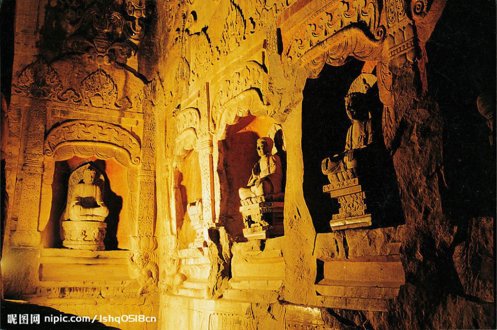
After breakfast, we will travel by coach for approximately 1.5 hours to visit the Longtou Mountain Grottoes. The scenic area includes the Northern Longtou Grottoes, the Song Dynasty Eight-Polygon Nine-Story Brick Pagoda, the Longtou Mountain Residence, the Buddhist Studies Center, and other sites such as the Botanical Garden. It is a masterpiece of Buddhist sculpture art. The main statue is a Vairocana Buddha seated statue, standing 5 meters tall. The statue is majestic and dignified, making it the largest sculpture in the Longtou Grottoes. The fire sculpture behind the statue is stunning, with seven fire dragons interspersed, carved with intricate detail and exquisite decoration, representing the pinnacle of Northern Qi artistic achievement.
Next, we will visit the Ci County Floating Carvings, an important survivor of the ancient northern folk tomb system and Ci County tomb culture. Centered on the white-on-black porcelain floating carving art from the Song to Jin-Yuan periods, it vividly displays folk life, opera stories, and auspicious patterns. Its bold lines and contrasting black-and-white decorative style embody the unique artistic charm of Ci County tombs. It is currently a National Key Cultural Relic Protection Unit and a valuable tangible resource for researching ancient Chinese pottery art and folk culture.
After lunch, we will drive for approximately 1.5 hours to Empress Wu's Palace (Wangcun), the largest and earliest existing ancient architectural complex in China dedicated to worshipping the founding empress of China. Known as the "Ancestral Temple of Chinese Women," it is an important base for studying Chinese ancestral culture. This thousand-year-old ancient palace clings to the sheer cliffs of the Dan Ridge, elevated by the autumn colors of the mountains. The halls, built in the Northern Qi period, resemble a phoenix spreading its wings, perched on the red cliffs. At this time, the Taihang Mountains are in full autumn splendor: the yellow below the cliff is fiery red, the mountain plum leaves are dyed orange, interspersed with the dark green of pines and cypresses, spreading from the foot of the mountain to the flying eaves of Empress Wu's Palace. It is as if the seven colorful stones scattered by the female deity to repair the sky have turned into this mountain's autumn light.
Empress Wu's Palace was first built during the Northern Qi period. It was constructed when Northern Qi Emperor Gao Yang, on his way from Duzhou (now within Linzhou, Hebei) to Jinyang (now Taiyuan, Shanxi), established it as a traveling pavilion for rest. Later, through successive restorations and expansions, it became today's grand scale. The pillars of the first level are buried deep in the mountains for a solid foundation; the second level has a gap between the building and the mountain; the back of the third level is connected to the mountain with iron chains, which help stabilize the structure, creating the unique "living building" and "hanging temple" scenic view, one of the ten great ancient architectural wonders of Hebei Province.
After the visit, we will return to Datong by coach for approximately 2 hours and check into our hotel.
[Zhaozhou Bridge] (approx. 3 hours): After breakfast, drive for about 2 hours to Zhao County to visit the Zhaozhou Bridge, known as the "First Bridge Under Heaven." Originally constructed in the Sui Dynasty by master mason Li Chun, it is one of the world's oldest, longest-span, and most intact single-arch open spandrel stone bridges. Its construction pioneered the "open spandrel" structure, offering significant scientific value and profound influence on later bridge architecture worldwide. The bridge's carvings are vigorous and dynamic, reflecting the Sui Dynasty's robust and solemn stone-carving style with intricate artistic detail.
[Zhengding Ancient City & South City Gate] (approx. 3 hours): After lunch, drive for 1.5 hours to the Zhengding Ancient City. Visit the South City Gate to view the majestic Yong'an Gate, which has a history of over 1,600 years. Initially built in the Eastern Jin period with northern Zhou stone masonry, it was reconstructed as an earthen city in the Tang Dynasty and later expanded into a brick city 24 li (approx. 12km) in perimeter during the Ming Dynasty; the surviving walls date to the Ming era. Standing on the south wall, you can view the city's panorama and spot the four famous towers: [Tianning Temple – Lingyun Pagoda] (also known as the Wooden Pagoda); [Kaiyuan Temple – Yimiao Pagoda] (the Brick or Square Pagoda); [Guanghui Temple – Hua Pagoda] (the Flower or Treasure Pagoda); and [Linji Temple – Changling Pagoda] (the Blue Pagoda).
[Rongguo Residence] (approx. 1.5 hours): Tour the Rongguo Residence, a complex of late Ming and early Qing architecture designed and built strictly according to the classical novel *Dream of the Red Chamber* to serve as a filming location for the TV series. Based on the novel's description of the "mansion of the noble lords and noble ladies of the court" and Qing dynasty wooden construction norms, it was also built referencing the architectural standards for ducal mansions found in the *Great Qing Hui Dictionary*. The residence consists of two main areas: the Rongguo Residence and Ningrong Street.
[Return Transfer]: After the tour, we will arrange transfers to the station according to your return schedule, concluding this pleasant North China journey.
[Shanghai]: Arrive in Shanghai!
What's Included
Transportation: Round-trip train from Shanghai to Shijiazhuang with double sleeper berths [names required 16 days in advance to ensure lower bunk; specific carriages and berth positions not guaranteed]; Air-conditioned tour coach ensuring one seat per person; experienced drivers familiar with the route and attentive service;
Meals: 5 breakfasts and 9 lunch/dinners; hotel breakfast included, non-refundable if not taken. Meals are served in groups of ten (10 dishes, 1 soup); menu will be adjusted if the group is under 10 pax. Lunch/dinners do not include beverages or alcohol. (Children not occupying a bed are not included in meals.)
Accommodation: Standard double rooms at 4-star hotels; (any single room supplement is at your own expense)
Admission Tickets: First-entry admission tickets for all scenic spots listed in the itinerary;

What's Not Included
1. Personal expenses (such as laundry in the hotel, phone calls, and other services not mentioned);
2. Single room supplement or extra bed fees;
3. Meals and transportation expenses during free time outside of the itinerary;
4. Additional costs due to unforeseeable events such as traffic delays, cancellations, war, strikes, natural disasters, etc.;
5. Additional costs incurred due to personal liability for breach of contract, personal fault, or personal illness resulting in personal injury or property loss;
6. All costs not included in the tour price;
7. The order of the itinerary and accommodations will be arranged by the travel agency according to actual conditions, but without reducing the number of attractions. No hotel accommodation is provided during free time within the itinerary.
8. The price is a package deal. If the tourist voluntarily cancels the trip or voluntarily cancels other items during the trip, no refund will be issued.
9. If the tourist is unable to join the tour for personal reasons, any unused benefits are considered voluntarily waived, and no refund will be issued.
How to Sign
- 1) Sign at Our Office
- Room 1207, No. 188 Wujiang Road, Jing'an District, Shanghai
- 2) Sign by Courier
- We courier the stamped contract to you; sign it and courier it back to us.
- 3) Door-to-door Signing
- On-site signing service (appointment required; available within Shanghai's Outer Ring area only).
Payment Methods
- 1) Pay at Our Office
- Cash or POS card payment; UnionPay credit and debit cards are accepted.
- 2) Bank Transfer
- Make a transfer via online banking or at a bank counter.
- 3) Third-party Payment
- Transfer to us via Alipay.