
[Airport Departure]: Dear VIP guests, please arrive at the airport two hours prior to departure with valid identification documents and luggage to check in. Please keep your mobile phone reachable before departure. The tour guide will meet you at Lanzhou Airport for pickup.
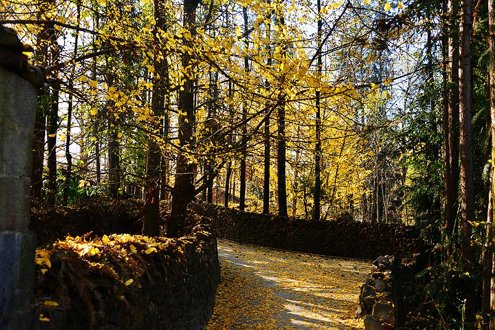
[Silver Camphor Village] (approx. 2 hours): After being picked up and taking a short rest, proceed by coach to Silver Camphor Village, renowned in China as a folk art village for its natural landscape of “village in the forest, forest in the village.” The precious hundred-year-old camphor trees give this small village an ancient and profound atmosphere. In late autumn, yellow leaves flutter around the houses, on the paths, on the stone walls, and on the tiled roofs, creating a scene of golden brilliance. Stepping into this place is like entering a golden fairy tale world.
[Dongshan Hot Springs]: Afterwards, visit Dongshan Hot Spring Village to enjoy hot spring SPA (please bring your own swimming suit). Located beside a thousand-year-old village, bath in the centennial camphor hot spring to wash away fatigue and stress. Check in to your hotel in Tengchong in the evening.
[Rehai Scenic Area] (approx. 2.5 hours): After breakfast, tour the Rehai Scenic Area, a geothermal zone known for its egg geysers, sulfur springs, and hot springs. The highlight is the Great Pot, with water temperatures reaching approximately 100°C, a diameter of 6.12 meters, and a depth of 1.5 meters. The steam rises dramatically, allowing you to experience the local folklore of "boiling eggs in the sulfur springs." Approaching the hot springs, you'll be surrounded by mist, with various attractions like the Sulfur Spring, Great Pot, Explosion Spring, and Fairy Bath, each offering stunning views that leave visitors in awe.
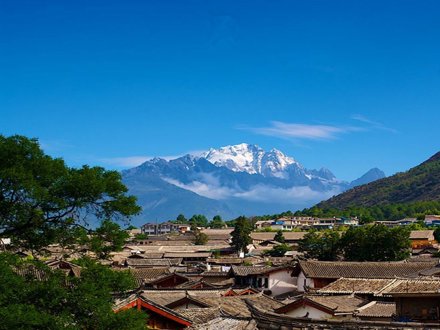
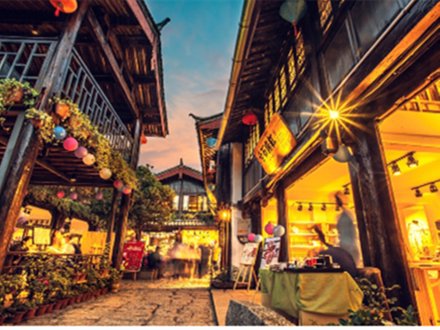
[Heshun Ancient Town] (approx. 2 hours): After lunch, drive to Heshun Ancient Town in Lushui County. This town blends rich history and culture with a pristine natural environment, making it a popular filming location for many movies and TV dramas. After checking in and leaving your luggage, you can leisurely explore the quiet and harmonious streets and alleys, enjoying the unique atmosphere of this ancient town at your own pace.
Check in to your hotel in Tengchong in the evening.
 和顺古镇
 和顺古镇
[Huxi Anti-Japanese War Memorial Museum] (approx. 0.5 hours): After breakfast, proceed to the Huxi Anti-Japanese War Memorial Museum. The exhibition halls are divided into ten sections: The War's Aftermath, The Enemy Before Us, The Xungyi Line, Furious Counterattacks, Desperate Offensive, Forcible Exit, Veterans Who Did Not Survive, Prayers for Peace, WWII Soldier Exhibits, Japanese Bacteriological War Crimes in Huxi, and Qinghai Cavalry Corps Relics. The museum displays 22,000 artifacts and 1,700 photographs, with its collection exceeding 100,000 items. The Wall of Names of the Chinese Expeditionary Force, an ancillary engineering project located to the west of the museum, is 133 meters long and engraved with the names of over 100,000 Chinese Expeditionary Force officers, allied officers, local guerrilla fighters, civilian casualties, and personnel from participating units. In 2014, the State Council designated the Huxi Anti-Japanese War Memorial Museum as a "First-Batch National Anti-War Facility and Site" and awarded it the title of "Strait Exchange Base." In 2020, it was rated as a National AAAA-level Scenic Area. In 2024, it received the status of a National Second-Class Museum.
[Xungyi National Martyrs Cemetery] (approx. 1 hour): Next, visit the National Martyrs Cemetery at the foot of Phoenix Mountain in Xungyi, Yunnan, where eight thousand martyrs of the Chinese Expeditionary Force rest peacefully by the majestically flowing Ga River. Established in January 1945, the cemetery covers an area of over 80 mu (approx. 5.3 acres) and was built by the people of Xungyi to commemorate the officers who died conquering Xungyi from the 20th Corps of the Chinese Expeditionary Force. It is also the earliest established and largest-scale anti-Japanese war martyrs cemetery in China. (Note: The cemetery is closed on Mondays; on such days, this stop will be omitted.)
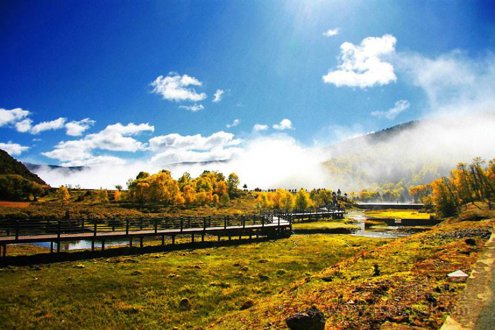
[Beihai Wetland] (approx. 2 hours): Afterwards, tour the Beihai Wetland. Qinghai Lake lies between the mountains at an elevation of 1,950 meters, which is about 200 meters higher than Beihai. Due to differences in elevation and environment, the two lakes, despite being only about 1,000 meters apart, have distinct characteristics: Qinghai Lake's water is slightly acidic, making it one of only three acidic lakes in the world. Beihai is the source of the Da Longjiang River (Dulong River), with large portions of its surface covered by grass mats up to one meter thick. These mats support the lush growth of Beihai Orchid, Yampa Grass, Dandelion Grass, Drift Grass, and many wild herbs and flowers. The Xungyi Beihai Wetland Scenic Area is surrounded by mountains on all four sides with a unique geographical location, belonging to a plateau volcanic crater lake ecosystem. Large floating landmasses drift on the water surface, resembling giant flower clusters with colorful threads, characterized by complex biodiversity and extremely high productivity. It holds high value for ecological tourism and scientific research. After the tour, transfer by coach to the Lihe Hot Springs Hotel for check-in and rest.
After breakfast, we will drive to visit the [Southern Dai Chieftain’s Palace] (approx. 1 hour): The architectural complex is laid out in the Han-style courtyard format, featuring five entrances and four courtyards. It includes a residence, a guard room, and a public hall, covering a site area of 10,625 square meters and a building area of 7,780 square meters. It is one of the best-preserved chieftain’s buildings nationwide. Declared a National Key Cultural Relics Protection Unit in 1996, it was rated as a National 4A Tourist Attraction in 2004. The “Tengxi Chieftain Museum” was established in 2015, serving as a vital resource for studying the history of Yunnan’s ethnic minorities and the chieftain system. It is famously known as the “Old Palace of the Dai People” and the “First Palace of Tengxi.” Enjoy a slice of rural tranquility and gain a deeper understanding of Dai ethnic customs.
Then, we will drive to Zhedili, China’s smallest border city, to visit the national-level seaport known as the “First Town of the Ten Thousand-Li Frontier”—the [Zhedili] (approx. 1 hour): Zhedili faces Mawlamyine in Myanmar across the river; the two towns are so close that roosters’ crows can be heard across the border. Border residents move freely, and the two cities have a friendly relationship, with many cross-border family ties. We will tour the [Zhedili City View], the [China-Myanmar Friendship Bridge], and the [China-Myanmar Boundary Marker] (located at the junction of the Teng-Mou Highway and the Shi-Du Highway; approx. 0.5 hours).
Afterward, we will explore the [Molly Tropical Rainforest] (approx. 1.5 hours): A natural oxygen bar, we will stroll and view the scenery here, enjoying a variety of tropical and subtropical plants and stone-covering trees with mesh-like roots. Following the sound of the water, we will proceed to the end of the canyon, where our eyes will suddenly open to reveal a waterfall approximately 60 meters high—this is the [Molly Waterfall]. In the evening, check into your hotel in Zhedili for rest.
[Village on Both Sides of the Border] (approx. 2 hours): After breakfast, head to this unique spot located about 10 kilometers from the Ruili urban area, right next to the famous No. 71 boundary marker on the China-Myanmar border. It is a classic geographical curiosity known as "One Village, Two Nations." The international boundary line splits one Wa ethnic village into two: the Chinese side is called Yijing, while the Myanmar side is called Zhaqiao. The border within the village is defined by bamboo fences, village paths, streams, and earthen mounds. It is a common sight for Chinese vines to climb over bamboo fences to fruit in Myanmar, or for Myanmar hens to wander into Chinese homes to lay eggs.
[Daba Na Western Pearl Garden] (approx. 1 hour): Subsequently, visit the Daba Na Western Pearl Garden. Now developed into a high-quality scenic spot characterized by its rustic, natural, and exotic charm, it is a rare ecological garden in the country.
[Wa Ethnic Ancient Town] (approx. 0.5 hours): Later, descend the mountain to check out the Wa Ethnic Ancient Town. This area is the Wa King's Palace, featuring a cluster of buildings with distinct ethnic characteristics. Unlike the crowds in Xishuangbanna, this town is serene. Walking down the main street, you are greeted by strong Southeast Asian vibes; every shot looks like a cinematic blockbuster, and the atmospheric vibe is incredibly full.
[Dourou Big Gold Pagoda] (approx. 1.5 hours): The Dourou Big Gold Pagoda stands majestically on the slopes of the mountains surrounding the Lashihkang Lake, embodying the architectural style of the Southern Asian Royal Palace. It carries a deep cultural significance within the Naga ethnic community. In Naga villages, Buddha temples are a common sight, serving as a cultural symbol of Naga Buddhism. They harmonize beautifully with the traditional Naga settlements and the tropical natural landscapes, creating a serene and mystical atmosphere. The Dourou Big Gold Pagoda is the prime example of this.
[Dourou Big Silver Pagoda] (approx. 1 hour): Depart for a tour and photography session at the Dourou Big Silver Pagoda, also known as the Thousand Buddha Silver Pagoda, a landmark of Lashihkang. Situated on a mountain slope facing the lake, it overlooks the Dourou Big Gold Pagoda across the ridge. The Silver Pagoda is 66 meters high and 46 meters in diameter, consisting of 80 smaller pavilions. It features a solid design with a predominantly white base, its walls covered in silver-colored ceramic tiles. Each spire is crafted from Naga silver, housing a total of 2,012 Buddha statues and reliquaries. It is renowned as the 'First Pagoda of Southern Buddhism.' The scenic area spans approximately 1.2 hectares and is organized into one ring and four zones: the sightseeing tour route, the hand gesture area, the Zen plaza, the pagoda shadow area, and the main pagoda area. It features various thematic buildings such as the lotus forest, silver wheel plaza, viewing platform, human-shaped walkways, and scenic sculptures, complemented by lighting displays and flower viewing areas. The Dourou Big Silver Pagoda is an important symbol of Southern Buddhist culture and a showcase of traditional Naga culture. Together with the Gold Pagoda, they reflect each other, displaying Lashihkang's unique artistic style and architectural charm, serving as the city's iconic landmark.
[Departure]: After the tour, transfers to the airport will be arranged according to your flight schedule, concluding your pleasant journey!
What's Included
【Transportation】: Round-trip team economy class airline tickets from Shanghai to Leshi (tax included); Seat allocation is subject to the airline, once tickets are issued they are non-refundable and non-changeable, cancellation results in total loss of ticket value; Special Notice: Any losses caused by inability to issue tickets or board flights due to personal credit issues must be borne by the individual
【Local Transport】: Luxurious 2+1 VIP tour bus for the entire trip; (If the number of tourists is less than 15, a different vehicle type will be arranged)
【Accommodation】: 5 nights in hotel standard rooms (2 nights in 4-star + 3 nights in 5-star) as listed in the itinerary, the tour fee includes one bed per person per day (single room supplement is not provided and must be arranged and paid by the guest).
Reference Hotels:
Xishuangbanna*2 nights (5-star): Century Jin Yuan Hotel, Guan Fang Da Hotel, Yu Du Hotel or equivalent
Lianghe*1 night (5-star): Nan Gan Ban Shan Hot Spring Hotel or equivalent
Leshi*1 night (4-star): Liu Chuan Hotel, Yun Mo Hotel, Jin Fu Da Hotel or equivalent
Deqin*1 night (4-star): Shang Jing International Hotel, La Yi Hotel, Yu De Huan Yuan Resort Hotel or equivalent
【Meals】: 4 breakfasts and 7 lunches/dinners per standard of 50 RMB per meal (including 2 specialty meals: Mangle Feast and Pigeon Feast); Breakfast is included in the hotel, tables for 10, dishes will be reduced if the number of people is insufficient; Meals waived by guests for personal reasons will not be refunded
【Guide】: Excellent local tour guide (pickup and drop-off at airport arranged by travel agency staff; if the group size is less than 8, a driver-gold will act as the guide, and scenic area commentary service will not be provided)
【Children】: Ages 2-11 years old are considered children, no bed included, no breakfast, admission tickets to be arranged by parents;
What's Not Included
1. Single room supplement
2. Travel accident insurance and flight delay insurance are not included; it is recommended that guests purchase their own
3. Admission tickets, sightseeing carts, and other remaining electric carts are not included

How to Sign
- 1) Sign at Our Office
- Room 1207, No. 188 Wujiang Road, Jing'an District, Shanghai
- 2) Sign by Courier
- We courier the stamped contract to you; sign it and courier it back to us.
- 3) Door-to-door Signing
- On-site signing service (appointment required; available within Shanghai's Outer Ring area only).
Payment Methods
- 1) Pay at Our Office
- Cash or POS card payment; UnionPay credit and debit cards are accepted.
- 2) Bank Transfer
- Make a transfer via online banking or at a bank counter.
- 3) Third-party Payment
- Transfer to us via Alipay.
 “Scan” the QR code to view this tour on your phone