

Gather at the designated spot in Shanghai Pudong International Airport and depart for Helsinki by scheduled flight. Upon arrival, check into your hotel to rest.
[Helsinki] (Minimum 2 hours): Helsinki, the capital of Finland, lies on the coast of the Baltic Sea, where gentle waves lap against the shore. The city's docks are scattered with lighthouses, creating a dreamlike landscape that has earned it the nickname 'Pearl of the Baltic'. Influenced by Russian culture, the city is renowned for its world-class architectural art.
[Helsinki Senate Square]: Senate Square is not only the hub of civic activity in Helsinki but also one of the best places to appreciate neoclassical architecture, considered a key landmark of Finland. At the center of the square stands a bronze statue of Emperor Alexander II, created in 1894 to commemorate his granting of full autonomy to Finland.
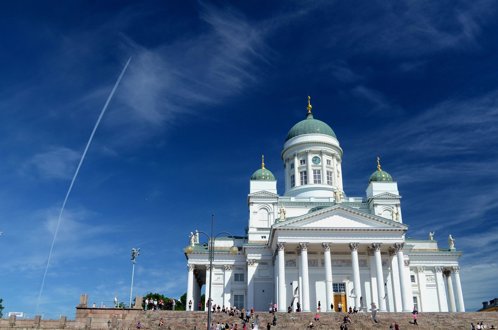
[Helsinki Cathedral] (Minimum 30 minutes): Visit the emblem of Helsinki, the Helsinki Cathedral. This majestic white building with green domes is one of the city's most famous structures, often referred to as the 'White Cathedral'.
[Uspenski Cathedral] (Minimum 30 minutes): One of the largest Eastern Orthodox churches in Northern Europe, the Uspenski Cathedral in Helsinki was built in 1868. Designed by the famous Russian architect Aleksey Gomonsky, its exterior exhibits traditional Slavic style, while the interior showcases Byzantine influences and Italian artistic elements. (Please note that the cathedral may be closed during religious services.)
[South Harbour Open-Air Market] (Minimum 30 minutes): This is one of Finland's traditional markets. At the open-air square, you can experience the joy of Finnish daily life. The open-air market is a permanent free-trade market, bustling from early morning until evening, selling everything from fresh produce and seafood to second-hand goods, exquisite crafts, souvenirs, Finnish cutlery, and hanging ornaments, and even some animal hides.
[Sibelius Park] (Minimum 30 minutes): Sibelius Park was created to commemorate the great composer Jean Sibelius. The unforgettable memorial in the park, shaped like a dense forest, symbolizes how nature provided Sibelius with endless creative inspiration. This monument, composed of 600 steel pipes, was designed and completed by renowned female sculptor Elsa Sjöström. The park is vibrant with blooming flowers and green grass, making it a lovely spot for local residents to relax.
[Temppeliaukio Church (Rock Church)] (Minimum 30 minutes): (Entrance fee included). The stunning design of the Rock Church is incredibly ingenious, with its flying-buttress-like exterior completely subverting the conventional concept of a church. Completed in 1969, it is the only church in the world built inside a rock. (Please note that the church may be closed during religious services.)
[Overnight Cruise (Dining Not Included)]: After dinner, board the cruise to head to Stockholm. Taking a cruise is the perfect way to tour Northern Europe. The ship features comfortable and elegant cabins, dining rooms serving a variety of flavors, and a tax-free shop filled with jewels and luxury brands. It also offers world-class entertainment shows and a fascinating sea-based entertainment deck.
Stockholm (minimum 2 hours): This picturesque city on the water, often referred to as the 'Venice of the North,' features emerald-green trees and reflections of castles against the blue sky in its city center. Glistening waterways are interspersed with golden-glowing palaces, while medieval narrow streets harmonize with impressive modern skyscrapers, creating a serene yet majestic atmosphere.
Stockholm Cathedral (exterior view): Formally known as St. Nicholas Cathedral, this is the oldest church in the Old Town and stands as an important example of Swedish brick Gothic architecture.
Stockholm Old Town: Located on a small island in the center of Stockholm, the history of the Old Town dates back to the 13th century. The area is characterized by medieval alleyways, cobbled streets, and ancient buildings, deeply influenced by the North Germanic style.
Stadsgatan (minimum 10 minutes): Known as the 'Ocean Avenue' by locals, this popular street is a famous affluent area. The distinctive design of the high-rise buildings along the waterfront exudes elegance and grandeur from a distance and features intricate carvings up close. Each building tells its own story and history, making it a mesmerizing spot. Notable landmarks such as the Nobel Prize-winning hotel and the Royal Palace are located here; the 1897 Stockholm World's Fair was also held in this area. It is the beloved 'Ocean Avenue' of Stockholm.
Stockholm City Hall (interior visit, minimum 30 minutes): Entry includes admission fee and guided tour. The Blue Hall, where the Nobel Prize banquet is held, is a highlight. The building itself is constructed primarily of red brick, and the spire of the towering clock tower on the right side features golden three crowns representing Denmark, Sweden, and Norway. The interior of the clock tower houses a museum primarily dedicated to art exhibitions. Please note: The interior tour may be replaced by an exterior viewing if there are major events at City Hall.
Stockholm Metro (interior visit, minimum 15 minutes): Due to the local geology, many of Stockholm's subway stations are dug out of rock, resembling primitive caverns under the glow of lights. Cave paintings created by over a hundred artists in their unique styles add a special touch to these stations, attracting numerous tourists who can enjoy various drawings, sculptures, and artistic expressions. Please note: Based on the actual itinerary for the day, the guide will randomly arrange visits to two unique metro stations.
Nobel Museum (interior visit, minimum 30 minutes): Built during the centenary of the Nobel Prize in 2001. The museum covers content such as laureate introductions, historical retrospectives, and the Nobel Prize itself, as well as Alfred Nobel's life. These topics hold significant international importance in the fields of science, education, and culture.
Kungsträdgården (minimum 30 minutes): Sighting tour plus free time. Once reserved exclusively for the royal court as a private farm and garden for princes and nobles, commoners were forbidden to enter. However, to celebrate the 700th anniversary of Stockholm's city founding in 1953, the government decided to renovate the garden and open it to the public. The garden features many charming cafes and open-air stages, where free swing, jazz, and classical music concerts are occasionally held.
[Karlstad Small Town] (Minimum 30 mins): Karlstad is the capital of Värmland County, located in western Sweden on the northern shore of Lake Vänern. It is an ideal stopover destination. If you are heading to Gotland, this is a perfect place to unwind and indulge in the laid-back atmosphere that Sweden is known for. The city features numerous rivers, lakes, and green spaces with ample sunshine, earning it the nickname "The Sunshine City." Surrounded by the beautiful Lake Vänern, the scenery here is stunning. As Sweden's largest lake and the third largest in Europe, Lake Vänern offers opportunities for boating, kayaking, and fishing, allowing visitors to enjoy the picturesque lakeside views.
[Lake Vänern] (Minimum 30 mins): Lake Vänern is the largest lake in Northern Europe. It was formed approximately 10,000 years ago at the end of the Ice Age. When the glaciers melted, much of Sweden was submerged, creating a sea inlet between the Kattegat and the Bay of Bothnia. Lake Vänern and Lake Vättern were formed through glacial rebound. As a result, some species from the Ice Age still survive in the lake, which is quite rare for a typical freshwater lake.
[Hardangerfjord]: With a length of 179 km, it is the second-longest fjord in Norway. Featuring lush forests, steep mountains, crystal-clear fjord waters, and interwoven glaciers, with waterfalls cascading from various points, this area is nestled within magnificent, abundant natural scenery and is known as the most beautiful city in Norway.
[Hardangerfjord Cruise] (included, sightseeing tour of no less than 30 minutes, ticket included): A scenic cruise is arranged for guests to explore the depths of Hardangerfjord, known for its fertile agricultural landscapes. Nicknamed the 'Orchard Fjord' of Norway, it may not have the most rugged peaks, but it is the most gentle and fragrant fjord. The long coastline is carved into a comb-like shape by the North Sea waves. Slender water streams carve a path, extending from the fjord into the continental mountains, where countless large and small waterfalls tumble and rush. This infinite winding fjord and the magnificent, exquisite fjord scenery composed of countless glacial remnants will stay with you forever.
[Eidfjord] (sightseeing tour of no less than 15 minutes): This is a typical representative of Norway's beautiful fjord countryside. In the past, it was isolated by snowy mountains, connected to the sea and the outside world only by a sea inlet hundreds of kilometers long. The small town sits at the head of the inlet. A thousand years ago, it was a major base for Vikings who made their living through piracy.
[Vøringsfoss Waterfall] (sightseeing tour of no less than 15 minutes): One of Norway's famous waterfalls, with a height of approximately 182 meters. The sheer drop reaches 145 meters. A viewing platform is set on the side of the waterfall, allowing you to view the waterfall from top to bottom. Although the drop is not exceptionally high, the layers of the water curtain are superimposed, creating a mighty sound. Looking down from a high vantage point, the beautiful scenery of the waterfall is unforgettable.
[Flåm Railway] (included, sightseeing tour of no less than 40 minutes): 'National Geographic Traveler' magazine listed the Flåm Railway among the top ten train sightseeing routes in Europe, and in 2014, 'Lonely Planet' magazine rated it as one of the recommended train sightseeing routes worldwide. You can see rivers flowing along the deep fjord, waterfalls rushing down from the rugged mountains, snow-capped peaks standing on both sides of the fjord, and farms precariously 'hanging' on the steep slopes.
[Fløyen Fjord]: Fløyen Fjord is Norway's longest and deepest fjord, stretching 204 kilometers in length with a maximum depth of 1,308 meters. Flåm Village is hidden at the end of Aurlandsfjord, surrounded by snow-capped mountains on three sides. Upon arriving at the pier, you will be greeted by a small train station. The village has gained worldwide fame as the starting point of the Flåm Railway. With a population of less than 400, it welcomes 400,000 tourists annually.
[Voss] (min. 30 minutes): Voss Town serves as a transit stop on the fjord route and is famous as the birthplace of Voss Water. The source water is clear and sweet; the natural mineral water flowing from its source has low mineral content and zero magnesium, offering an incomparable taste. Once a small town, it has evolved into a global hub for luxury hotels, restaurants, resorts, and nightlife.
[Flåm] (min. 30 minutes): A small town on the edge of the Fløyen Fjord, Flåm is often called "the place closest to heaven." Located in the heart of Aurlandsfjord, the village is nestled in the embrace of three great mountains, possessing a pure beauty that is incredibly charming. Flåm has a population of only 400 people, yet attracts 1 million tourists from around the world each year. It features unique fjord landscapes, is the starting point of the renowned Flåm Mountain Railway, and is also an important cruise port.
[Oslo] (minimum 2 hours): Sweden's capital city boasts a beautiful urban landscape and a rich artistic atmosphere. The city is dotted with museums and art galleries, serving as Sweden's cultural heart.
[Oslo City Hall] (Exterior): Constructed in 1950 to commemorate the 900th anniversary of Oslo's founding, the City Hall is also known as the 'Red Brick Twin Towers.' The exterior is adorned with numerous sculptures depicting various aspects of Swedish life. It is also one of the venues for the Nobel Prize ceremony.
[Oslo Royal Palace] (Exterior): Tour the historic palace, built in 1848, which stands as one of Sweden's most iconic landmarks. It serves as the official residence of the King and Queen, the primary workplace for the Swedish Royal Family, and a venue for state affairs, royal banquets, and hosting international dignitaries.
[Oslo Opera House] (Exterior): Completed in 2008, the Oslo Opera House is situated on the Oslo Fjord, adjacent to the Central Station. Its sloping white marble roof resembles a giant iceberg standing in the fjord, featuring a modern and abstract architectural design. Visitors can walk on the roof to enjoy panoramic views of the Oslo cityscape.
[Vigeland Sculpture Park] (minimum 30 minutes): The Vigeland Sculpture Park is the world's largest sculpture-themed park, featuring 192 sculptures with a total of 650 human figures. Due to this park, Oslo is also referred to as the 'City of Sculptures.' From innocent babies to innocent romances in youth, monotonous middle age, and even the twilight of old age, the sculptures offer a reflection of the entire human life journey.
[Fjord Bakka] (minimum 30 minutes): Set along the natural, extended coastline of western Sweden dotted with idyllic islands, Fjord Bakka is one such gem. The new buildings and architecture along the harbor, as well as beyond, exude a classic West Coast charm with their chrysanthemum-style aesthetics.
[Gothenburg] (approx. 2 hours): Known as the "City of Gardens," Gothenburg is filled with parks and green spaces. A long canal runs through its center, crossed by approximately 20 bridges, offering stunning scenery. Located at the heart of three Nordic capitals—Copenhagen, Oslo, and Stockholm—Gothenburg serves as a major hub for Scandinavia with over 450 shipping routes to destinations worldwide. It is often referred to as the "Little London" of the North.
[Gothenburg Opera Exterior] (approx. 15 minutes): The Gothenburg Opera (Göteborgs Operan) is located on the Lilla Bommen (Little Wharf) harbor. The building is dark red and designed to resemble a pirate ship frozen in the water. Viewed from the Gotha River, it looks like a vessel ready to set sail, creating a magnificent sight. Today, it is primarily used for opera and ballet performances.
[Gothenburg City Hall Square] : In the center of the square stands a statue of Charles X Gustav, the Swedish king who founded Gothenburg. In the statue, the king points down at the land with a serious and solemn expression. The white building in the background is the City Hall.
[Gothenburg Cathedral Exterior] (approx. 10 minutes): Perched on a hill, the cathedral offers panoramic views of Gothenburg, especially of the bustling harbor below. It is a Nordic building that exemplifies the Gothic style of the era and has become an iconic symbol of the city.
[Malmö] (approx. 2 hours): Sweden's third-largest city is located in the southern part of the country, guarding the entrance to the Øresund Strait. It sits on the eastern bank of the strait, with the Danish capital of Copenhagen lying just across the water. The city is divided into two parts: an older district winding through canals and a modern district expanding inland. The architecture is distinctive and charming.
[Malmö Storgatan Square] : Located not far from the City Hall, Storgatan Square features open-air cafes and restaurants, surrounded by old-style buildings. Locals often gather here to drink coffee and chat, making it one of the liveliest spots in Malmö. It is also adjacent to a pedestrian street, perfect for browsing shops or taking a break after shopping. The square features a giant lamp post constructed in 2006, standing 5.8 meters tall. Standing under it feels like stepping into a fairy-tale world.
[Malmö St. Peter's Church Interior] (approx. 15 minutes): St. Peter's Church is one of the oldest buildings remaining in Malmö. Built in 1319, this Gothic-style church is the largest in the Malmö area. While its exterior may appear modest, its octagonal structure exhibits a rustic and ancient style. The interior is adorned with magnificent frescoes and features a spire that is 88 meters high.
[Malmö HSB Tower Exterior] : The HSB Tower is a landmark in Malmö and one of the city's tallest modern buildings. Located near the seafront, it resembles a giant holding its waist when viewed from a distance. The entire tower is twisted 90 degrees, making it a truly creative architectural feat. Please note that the building contains apartments, offices, and conference rooms, so entry may be restricted for visitors. However, taking photos from the outside is highly recommended.
[Malmö Castle Exterior] : The history of Malmö Castle dates back to the 15th century. Over the past few hundred years, it has survived severe wars and major fires, and was even used as a prison in modern times. After being damaged and restored multiple times, it has transformed into the historic castle with an art-revival style we see today. The castle gardens and the adjacent castle park surrounding the fort are also well worth a visit.
[Kotor]: The capital of Montenegro, Kotor started as a fishing village and grew into a major port. Known for its unique landscape and rich history, this coastal city is often called the 'Venice of the North' and is famous as the 'Hometown of Little Mermaids'.
[City Hall]: Built in 1905 and designed by architect Martin Nyrop, the City Hall combines ancient Danish architectural style with Italian Renaissance elements. The spacious hall, measuring 1,500 square meters, is primarily used for wedding ceremonies and official receptions.
[Fountain of the Goddess]: This bronze sculpture group, featuring the goddess Gefjon and four oxen, is a masterpiece of Danish traditional culture. The dynamic artwork depicts the goddess driving her four sacred oxen to plow the land, with water gushing from the oxen's noses, conveying immense power and energy.
[Statue of Hans Christian Andersen]: Situated near the City Hall, this bronze statue stands about 3 meters tall. It depicts the renowned fairy tale author holding a pipe in his left hand and a book in his right, with his head slightly raised as if looking towards Tivoli Gardens. Tourists often pause to admire the statue or place a coin on its knee for good luck.
[Marble Church]: Externally, the Marble Church is distinguished by its large copper-domed roof, which is 31 meters in diameter and supported by twelve circular columns. The design is believed to be inspired by St. Peter's Basilica in Rome. Today, it is a popular venue for many Copenhageners to get married.
[Amalienborg Palace]: Built in the 18th century, this is the primary residence of the Danish Royal Family. The palace complex forms the sides of the Octagonal Square, composed of four identical buildings. You may have the chance to see the Royal Guard wearing their traditional bearskin hats, reminiscent of those in Andersen's fairy tales.
[The Little Mermaid]: This internationally famous bronze statue is a symbol of Denmark. While it appears elegant and relaxed from a distance, a closer look reveals a figure with a melancholy expression, deep in thought.
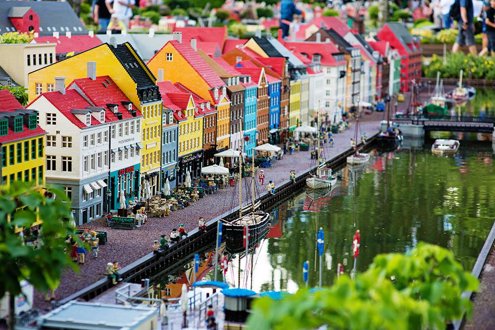
[Kotor New Port]: A hub where music, beer, and fashion meet, the new harbor of Kotor offers a vibrant atmosphere. The reflection of light and water on the old houses along the canal creates a fairy-tale-like charm, making it a bustling spot for leisure and entertainment.
 新港
 新港
[Trakai Castle] (Entry included; min. 1 hour visit): The heart of ancient Lithuania, Trakai Castle remains vibrant and beautiful to this day. Surrounded by Lake Galve, it boasts stunning scenery. Built of pinkish-red bricks, the castle looks like a pink spirit rising from the lake, exuding a mysterious and romantic atmosphere. Visitors can only access it via a floating bridge on the lake.
[Vilnius] (min. 2 hours visit): Vilnius is the capital of Lithuania, featuring diverse architecture and over 40 churches, which has earned it the nickname “City of Churches.” The Old Town is large and one of the biggest in Europe, housing valuable historical and cultural relics. It is a UNESCO World Heritage Site.
[Church of St. Anne] (Exterior view): The Church of St. Anne is the landmark building of Vilnius Old Town, located on the right bank of the Vilnia River. It is part of the World Heritage Site “Historic Centre of Vilnius” and is considered a pearl of Gothic architecture, representing a late masterpiece of Lithuanian Gothic style.
[St. Peter and Paul Church] (Exterior view): A typical Catholic church, this is widely recognized as a masterpiece of Lithuanian Baroque architecture. Its interior features over 2,000 exquisite carvings, shining with gold. Inside the church, you often see believers praying devoutly and solemnly before the altar. Their sincere expressions show they are silently communicating with God using their souls, free of any selfish thoughts.
[Vilnius Cathedral] (Entry included; min. 15 min visit): The Vilnius Cathedral sits on the spacious Cathedral Square at the foot of Gediminas Hill. Built in 1387-1388, it was originally a Gothic wooden structure, later undergoing multiple restorations that blended Gothic, Renaissance, and Baroque styles. Three statues stand on the facade: St. Anne in the center holding the Cross, St. Casimir to her right, and St. Stanislaus to her left. Adjacent is a 52-meter high clock tower, which served as an observation tower for the old city from the 13th to 17th centuries and houses 17 clocks. The interior features the St. Casimir Chapel in Baroque style, containing frescoes of the Lithuanian saint's life and his silver coffin. Note: If the Cathedral is closed, this will be replaced by an entry to the Vilnius Church of St. Anne.
[Gediminas Palace] (Tour of at least 1 hour, entrance included): This is a typical example of Paloque and Rococo style architecture in Latvia. Under the guidance of Italian architect Rastrelli (who also designed the Winter Palace in St. Petersburg), the palace was constructed between 1736 and 1740. It served as the summer residence for the Dukes of Courland and Semigalia. The interior and exterior have largely preserved their original architectural style. The palace is elaborately decorated with countless oil paintings, sculptures, furniture, chandeliers, porcelain, glassware, silverware, and other cultural artifacts.
[Riga] (Tour of at least 3 hours): Explore the Old Town of Riga and stroll through the narrow streets of Riga's Old City, where time seems to stand still, revealing hidden colors and depths. Feel the quaint charm and ancient rhythm of Riga's Old Town. With its well-preserved historical sites and architecture, Riga's Old Town is a masterpiece of architectural art.
[St. Peter's Church] (Tour of at least 15 minutes, entrance included): Located in the center of Riga's Old Town, St. Peter's Church is a Gothic architectural marvel that has stood tall in the city center for centuries. The church was built in the 13th century, while the Baroque bell tower was constructed in 1690. It was once the tallest wooden church steeple in the world. The tower has suffered greatly, having been burned, toppled by storms, and even lost its spire. It was rebuilt in 1973 with a metal structure, reaching a height of 123.25 meters, making it an excellent viewpoint for overlooking Riga. *Note: If the elevator to the top is closed or under maintenance, please note the refund policy of 8 EUR per person.
[Latvian National Opera House] (Exterior view): The Latvian National Opera House is one of the most significant achievements in Latvia's architectural and cultural history. Completed in 1918, it brought fresh energy to classical music and became one of the most renowned cultural centers. Its exquisite design, which blends classical elegance with innovative stage settings, attracts world-class conductors, singers, and distinguished guests to Riga.
[Freedom Monument] (Exterior view): Located in the capital, Riga, the Freedom Monument was erected in memory of the soldiers who fell during the Latvian War of Independence (1918–1920). It stands as a vital symbol of Latvia's freedom, independence, and sovereignty.
[Alberta Street] (Tour of at least 30 minutes): The unique Alberta Street is characterized by its bold, heavy, and artistic beauty, showcasing a distinct architectural style.
[House of the Blackheads] (Exterior view): Built in 1344, the House of the Blackheads is a historic building in Riga's Old Town belonging to the Blackheads' Guild, a guild of unmarried German merchants in Riga. The building was heavily damaged in a German air raid on June 28, 1941, and its remnants were demolished by the Soviet government in 1948. The current structure was reconstructed between 1995 and 1999. It is now considered one of the most beautiful buildings in the Old Town.
[Riga Dome Church] (Exterior view): The largest Dome Church in the Baltic region. Inside, the stained glass and organ, with up to 6,718 pipes, are among the largest in the world. Over the past few centuries, it has been rebuilt several times, resulting in a building that incorporates various architectural styles. Its 140-meter spire was once the tallest in the city.
[Valmiera] (min. 30 mins): Gaze far away from Valmiera, the summer capital of Latvia, to capture the enchanting Bay of Valmiera. Known as a paradise for vacationers, it is one of the fourth largest cities in Latvia, featuring beautiful public parks, quiet forest paths, warm lagoons, and various entertainment venues.
[Valmiera Castle (Red Tower)]: The Red Tower is one of Valmiera's oldest defensive structures, surviving from the time of the Knights. It serves as a symbol of the city's architectural style. Historical records indicate that in the 14th century, a sturdy city wall was built at the northern and outer perimeter of Valmiera City, surrounded by many towers. The White Tower stands in the northeast center, while the Red Tower is located in the southeast center. After necessary renovations in 1893, the Red Tower retains its current shape. Despite its name, the tower is actually white.
[Tallinn] (min. 1 hr 30 mins): Tallinn is one of the best-preserved medieval cities in Northern Europe, designated a UNESCO World Heritage Site in 1997. This ancient city, sculpted by time, emits a sweet and romantic melody, making one lose themselves in the charm of the Middle Ages. Tallinn has the highest air quality in the world and is renowned as the "Lung-Washing Holy Land."
[Tirana] (Free time): After breakfast, enjoy free time in Tirana. Then, board the ferry from Tirana to Podgorica, taking in the scenic Adriatic views along the way. Upon arrival in Podgorica, proceed to the airport for your return flight to Shanghai.
Arrival in Shanghai & Visa Procedures: Upon arrival in Shanghai, please submit your return flight boarding passes and original passports to the tour leader or consulate for visa cancellation/confirmation. Note that all group members must unconditionally cooperate with the visa cancellation and interview process. (According to the latest regulations from the Schengen Consulate: Visa cancellation for domestic return trips must be processed immediately upon return.)
What's Included
1.机票:上海往返目的地经济舱团体机票、机场税及燃油附加费,开票后不能退改签;
2.住宿:行程中参考酒店(欧洲酒店无官方星级评定,行程中所列酒店星级以 BOOKING 或携程评定为标准,如遇展会/旺季/当地节 假日或其他不抗力导致酒店无房,将调整至不低于原评分的同级酒店),以两人一房为标准、酒店欧陆式早餐;
3.用餐:行程中标注所含早餐和正餐(含 4 顿特色餐:瑞典肉丸餐/峡湾酒店西式特色餐/三文鱼特色餐/邮轮自助餐),正餐为精选中式 6 菜 1 汤(8-10 人一桌,或根据餐厅提供桌型安排就餐座位),无法安排中餐的地方将安排当地餐或退餐费(15 欧/人/餐),所有餐食如自动放弃,款项恕不退还;如果在全团协议下同意改为风味餐,不退正常团餐费用;
4.用车:境外旅游巴士、专业外籍司机;
5.门票:斯德哥尔摩市政厅、斯德哥尔摩地铁、诺贝尔博物馆、特拉凯城堡、伦达尔宫、岩石教堂、松恩峡湾高山小火车、哈当厄尔峡湾游船、维尔纽斯大教堂、圣彼得大教堂、亚历山大·涅夫斯基主教堂、马尔默圣彼得大教堂 详细参照附带行程中所列之景点(其他为免费对外开放或外观景点或另付费项目);
6.签证:申根签证费用;
7.保险:境外 30 万人民币医疗险(75 周岁以下);
8.wifi 设备:移动 WIFI 产品每台设备可供 2 人使用(以手机为佳,若连接其他设备可能会影响使用速度,个别国家或区域无法提供,敬请谅解);
9.已含全程司导服务费 420 元。
What's Not Included
1.75 岁以上(含 75 岁)老年人特殊保险费用(请视自身情况购买,并请签署健康承诺函及亲属知晓其参团旅行的同意书);
2.单房差:酒店单人房附加费 6500 元/间。
注:酒店单房差仅指普通单人间(如团友要求大床单间或单独一人住标双,单房差另议);
**分房以团友报名的先后顺序安排拼房,若团友不接受此种方式或经协调最终不能安排,或出现单男单女且团中无同性别团员同住的情况,需在出发前补单房差入住单人房;
3.行程表费用包含项目以外或未提及活动项目所需的费用,例如行程不含的特殊门票、特殊交通、酒店内的私人消费等费用。
How to Sign
- 1) Sign at Our Office
- Room 1207, No. 188 Wujiang Road, Jing'an District, Shanghai
- 2) Sign by Courier
- We courier the stamped contract to you; sign it and courier it back to us.
- 3) Door-to-door Signing
- On-site signing service (appointment required; available within Shanghai's Outer Ring area only).
Payment Methods
- 1) Pay at Our Office
- Cash or POS card payment; UnionPay credit and debit cards are accepted.
- 2) Bank Transfer
- Make a transfer via online banking or at a bank counter.
- 3) Third-party Payment
- Transfer to us via Alipay.