
Departure: Please gather at Shanghai West Station around 18:00 in the evening. Board the 'Yangtze Delta Star' tourist special train and head west.
Journey Scenery: After leaving East China, the train will pass through the Jiangnan water towns, the Yangtze middle reaches, and transition into the Yunnan-Guizhou Plateau. The landscape outside the window will gradually shift from ink-wash style gardens to lush forests, marking the beginning of a journey across four provinces through the colorful lands of southern China.
Onboard Journey Across the Yun-Gui Plateau: Continue your journey today as the train traverses the dramatic landscapes of the Yun-Gui Plateau. The Wumao Mountains, lush orchards, and the dramatic Beipanjiang Gorge unfold beyond the windows, offering ever-changing light and mist—a prime opportunity for photography enthusiasts. Onboard, enjoy a special program curated by the train’s host team, featuring themed activities and cultural interactions. The train is equipped with a mahjong room, KTV lounge, bar, and coffee shop. Seniors can enjoy a game of mahjong while children watch cartoons, ensuring laughter and camaraderie accompany the train as it moves forward.
Arrive at Xuanwei Station at 09:30 in the early morning by tour train. Transfer to a tour coach and proceed toward Zhaotong. Hike up the [Dagshan Scenic Area] (approx. 1.5 hours): a national nature reserve and a wintering site for Black-necked Cranes. During autumn and winter, rolling clouds over the sea form above an endless plateau grassland. The Jiagong Peak stands out among the undulating mountain waves. On days with favorable weather, a stunning halo phenomenon may appear. Afterwards, take the flight gear to the Glass Skywalk. Dagshan is a host site for the World Paragliding World Cup, and the glass viewing platform is suspended above a thousand-meter cliff. Looking down, you will see the vast sea of clouds below. Thrill and beauty meet here; brave travelers are sure to capture photos against the blue sky.
Then proceed to the [Zhaotong Old Town] (approx. 1.5 hours): a lively welcoming ceremony is held for your arrival. The blue stone-paved roads crisscross, with Ming and Qing dynasty old houses and ancient shops and stores standing tall. The essence of the thousand-year "Zhu Tiao culture" flows silently through the streets. Enjoy an ethnic-featured musical dinner and appreciate Miao-style performances: dances such as "Come to Dance," "Miao Dance," and "Love in the Mountains," songs such as "Grandpa Wants to Leave," "Who Knows Me," and "Xixi of the River," and other events including a blessing ritual and a peacock dance. After sightseeing, take the tour coach to the hotel, check in, and stay overnight in Zhaotong.
[Long Family Ancestral Hall] (approx. 1 hour): After breakfast, visit the Long Family Ancestral Hall, renowned as the 'Number One Family Ancestral Hall in Yunnan.' Its stone carvings, brick reliefs, wooden carvings, and colorful paintings are celebrated as the 'Four Marvels' of Northeast Chinese architecture. This is an ideal place to learn about the history of the Long and Lu clans, who were prominent military generals in the region.
[Buwa'an Pavilion] (approx. 0.5 hours): After the visit, transfer by vehicle to Luchun to visit Buwa'an Pavilion, a provincial-level creative village located in Anke Village next to the Victory Reservoir. Surrounded by pine and fruit orchards, it feels like a paradise lost in time. Enjoy diverse intangible cultural heritage activities including embroidery, sugar craft, and Zhu-Ti silver display demonstrations, along with live performances and songs that showcase the craftsmanship and rustic charm of the Yunnan mountain area. Have lunch here, then drive to Huaidi, known as the 'Hometown of Coin Kings.'
[Huaidi Coin Culture Square] (approx. 1 hour): Visit the Huaidi Coin Culture Square to see the 'World's Largest Ancient Coin'—the majestic Xianfeng Tongbao from the Ming Dynasty. This massive cast coin from the Jiajing period, measuring 57.8 cm in diameter, is listed in Guinness World Records and testifies to the glory of Huaidi's thousand-year copper merchant history. Huaidi Ancient City, a National Historical and Cultural Famous Town, flourished due to copper trading. Its eight major merchant associations, including Jiangxi and Hu merchants, feature diverse architectural styles, earning the title of a 'Museum of Ming and Qing Ancient Architecture.' The bluestone streets evoke the ambiance of the past. After the tour, transfer to Kunming to board the special train to Baoshan.
Approx. 08:30: Arrive at Baoshan Railway Station and head southwest towards Ruili on the Chinese-Myanmar border, known as the “Pearl of the Coast.”
[One Village, Two Countries] (approx. 1 hour): A unique settlement where two countries coexist around a single water source. The No. 71 border marker sits right in the middle of the village, where ethnic Jin and Jingpo families live side by side, sharing the same roots and origins.
[Mogao Border Port] (approx. 1 hour): The largest border trade port in Yunnan. Gaze across the Ruili River to the opposite side of the Shweli River in Myawaddy, Myanmar. The Friendship Street here is a vibrant hub for goods and commerce from both nations, showcasing a lively cross-border atmosphere.
After lunch, proceed to Leshi City, Dehong Prefecture. Check in at the iconic architecture of Leshi: [Leshi Golden & Silver Pagodas] (approx. 1 hour): A 76-meter-tall hollow structure clad in white stone. By day, the golden spire gleams in the sunlight; in the evening, the sound of bells carries on the breeze; and at night, illuminated lights make it resemble a “mandala in the sky.”
[Botanical Garden of Wuzhi] (approx. 1.5 hours): In the morning, visit the Wuzhi Botanical Garden. The garden is a miniature museum of the plant kingdom, housing century-old camphor trees, thousand-year-old wisteria, ancient ginkgo, and rare tropical and subtropical treasures such as the Dracaena and the Dragon Blood Tree.
[Ginkgo Village in Tongchong] (approx. 2 hours): After lunch, drive to the Ginkgo Village in Tongchong. Over 3,000 ancient ginkgo trees have rooted in the cracks of volcanic rocks for thousands of years. In late autumn, golden leaves blanket the stone-paved roads, cottages, and mountain walls, capturing the classic "city covered in golden armor" scene that is a favorite among photographers.
[Heshun Ancient Town] (approx. 1.5 hours): After the noon meal, tour Heshun Ancient Town. Historically a village on the southwestern silk route, the town features Ming and Qing dynastic architecture, traditional laundry stone slabs, and the Heshun Library (the first rural library in the region). Together, they narrate the story of "the path of loss," with a single library’s influence stretching from the western reaches to the southern ocean.
[Tengchong Martyrs' Cemetery & Western Heng Resistance Memorial Hall] (approx. 1.5 hours): In the morning, visit the cemetery where tens of thousands of Chinese Long March soldiers sacrificed their lives during the 1944 Western Heng counterattack. The memorial park is designed with a philosophy of reverence for nature and humanity, surrounded by dense pine and cypress forests where the spirit of patriotism resides. Pay your respects to this tragic chapter of history.
[Hot Spring Park] (approx. 2 hours): Afterward, drive to the park. Tengchong is one of the few surviving volcanic hot spring areas on the continent. Over 80 hot spring spots, including the Sulfur Mound, Great Cauldron (a large boiling spring), Bugle Spring, and Pearl Spring, are scattered across the area. The water temperature reaches up to 102°C. You can boil eggs or steam peanuts next to the 'Great Cauldron' to experience the tradition of 'hot soup boiled dry'. Depending on the day's schedule, enjoy a soak in the Tengchong Natural Hot Spring (bring your own swimsuit) to wash away the fatigue of travel.
[Return to Baoshan & Overnight Train to Dali]: After dinner, take the bus back to Baoshan Railway Station and board the famous 'Golden Triangle' train for an overnight journey to Dali.
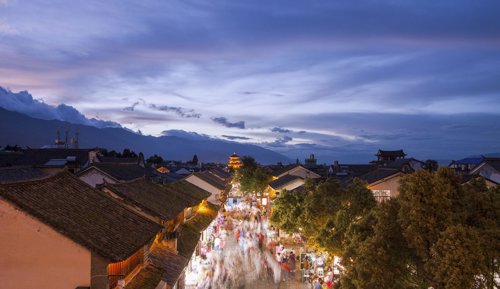
[Dali Ancient City & Nanren Street] (approx. 1 hour): Upon arriving in Dali in the early morning, transfer by coach to explore Dali Ancient City and Nanren Street, which carry the memories of the ancient Nanzhao Kingdom. Founded in 1382 during the Ming Dynasty, the ancient city features city walls, gates, the Wuhua Building, and white Bai ethnic dwellings lining Fuxing Road. Hudu Road (Nanren Street) is a miniature hub of Eastern and Western cultural fusion.
[Saguan Three Pagodas] (approx. 1 hour): Subsequently, visit the Saguan Three Pagodas, imperial temples originally built during the Nanzhao Dynasty in the early Tang period. The main Thousand-Buddha Pagoda stands at 69.13 meters high, while the two smaller North and South Pagodas are each 42.19 meters. For over 600 years, the three pagodas have stood in a tripod formation, slanted yet uncollapsed, serving as a landmark of Dali and a treasure of Bai Buddhist art.
[Erhai Lake & Viewing Platform] (approx. 30 minutes): In the afternoon, drive north along the Lining Highway, crossing the rolling hills to reach Erhai Lake, an alpine shallow lake at an elevation of 2,690 meters. Ascend to the Erhai Lake Viewing Platform to gaze at the entire lake—the Gama Goddess Mountain reflects in the water, and the lakeside villages of the Naxi people appear and disappear softly. This 'blue jewel on the plateau' is the ancestral home preserved by the Naxi people for generations.
[Tiger Leaping Gorge] (approx. 1 hour): Upon arriving in Lijiang in the early morning, head north to Tiger Leaping Gorge, one of the deepest gorges in the world. The gorge is 23 kilometers long and up to 3,900 meters deep. The Jinsha River flows powerfully between Jade Dragon Snow Mountain and Haba Snow Mountain.
[Jinsha River Grand Bend Viewing Platform] (approx. 30 minutes): After lunch, stop at the Jinsha River Grand Bend Viewing Platform on the way to Deqin. Here, the river traces a magnificent 'Ω' shaped curve beneath the white horse snowy mountain, locally known as the 'Moon Bay'.
[Meili Snow Mountain & Feilai Temple View Hotel]: Upon arriving in Deqin, take in the distant view of Meili Snow Mountain, the head of the Eight Great Sacred Mountains of Tibet. Its main peak, Kawagar, stands at 6,740 meters and remains an unconquered virgin peak. In the evening, check in at the Feilai Temple View Hotel to await the sunrise illuminating the golden peaks the next morning.
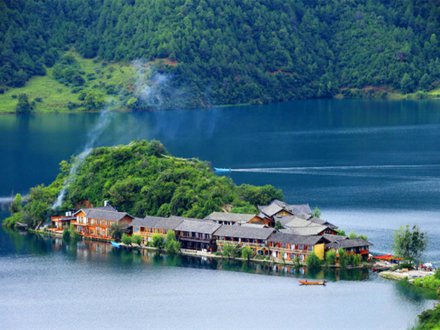
Route A: Early morning at Lhasa is the best time to view sunrise over the mountains—Kala Chölen is bathed in golden light by the morning sun, while boats gently glide across the water surface amidst the morning mist. After breakfast, proceed to the grand waterfall boat landing. Board a boat to [Liuli Island] (approx. 1.5 hours). The [Liuli Temple] on the island is the center of Tibetan Buddhist yellow sect activities in Lhasa, with its red walls and golden roof reflecting the blue lake water. After lunch, take a boat tour around the lake to [Lovers' Bay] (approx. 1 hour). The shoreline curves gently, with grasslands, wooden walkways, and the legend of a Tibetan bride's wedding procession adding a romantic touch to the scenery. Then, drive south back to Lhasa, enjoying the mountain views and apple orchards along the way. Overnight near Lhasa Old Town.
Route B: Early morning, view sunrise over Mount Meili from Potala Palace—Kawagbo Peak is ignited into a golden pagoda by the morning sun, with sea of clouds rolling like a waterfall, considered the most sacred moment in the Tibetan land. After breakfast, pass through Baima Snow Mountain Pass (elevation 4,292m) to enter Qogong, visiting the [Luo Chie Ancient City] on the old tea horse road (approx. 1 hour). The world's largest prayer wheel in the turtle mountain park requires multiple people to push, while the moonlight square is rustic and quiet.
Next, explore the largest Tibetan Buddhist Gelugpa monastery in southern Yunnan, [Songzheling Monastery] (approx. 2 hours), also known as the "Little Potala Palace." Built into the mountainside with a gilded roof that shines brilliantly, its three main halls house statues of Maitreya, Avalokiteshvara, and the 7th Dalai Lama, showcasing the concentrated display of Tibetan art and faith.
Then return to Lhasa. Overnight near Lhasa Old Town.
[Jade Dragon Snow Mountain] (approx. 4 hours): Take a vehicle to visit the mountain, whose highest peak, Fanshidian Glacier, stands at 5,596 meters. It is the southernmost modern oceanic glacier in the Northern Hemisphere. Board the cable car or ride yaks to trek to the Glacier Park, enjoying panoramic views of snow-capped peaks, alpine meadows, and cloud forests all at once.
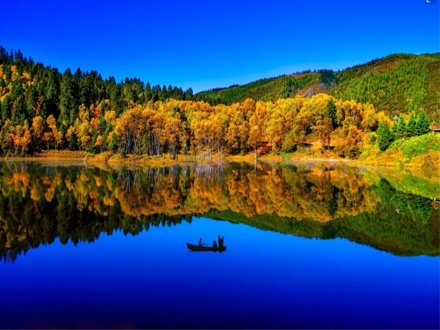
[Blue Moon Valley]: Afterwards, proceed to this idyllic valley formed by glacial meltwater. The valley features four interconnected lakes: Jade Liquid Lake (Yu Lake), Mirror Pond Lake (Jing Lake), Blue Moon Lake (Lan Yue Lake), and Tingta Lake. The water displays a dreamy blue hue due to the rich copper ions contained within.
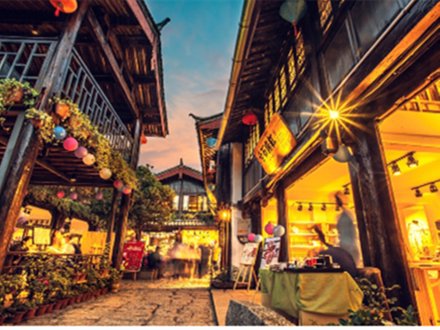
[Lijiang Old Town] (approx. 1 hour): In the afternoon, tour the ancient town, centered around the Sifang Street with its grid of colorful granite slabs. The local wooden yamen (governor's office) remains a historic witness to over 700 years of Naxi history. Wander the streets to listen to traditional Naxi folk music and watch the lively 'Dabao' (clapping) dance performances on Sifang Street. In the evening, board the night train, traveling south via Dali, Zhaotong, and Nanning, heading towards Pu'er via the Kunming-Pu'er railway.
 镜潭湖
 蓝月湖
◆ Route A: Arrive in Puzhehei early in the morning and drive to the Xishuangbanna National Nature Reserve. Visit the [Elephant Valley Scenic Area] (approx. 2 hours), widely regarded as Xishuangbanna's most captivating forest park and wildlife viewing destination. The area is world-famous for its unique tropical primitive forest landscapes and high density of wild Asian elephants. Under the guidance of your tour leader, proceed to the Skywalk Bridge for viewing; please do not linger on the elephant activity trails. The Elephant Valley Park features animal viewing zones, primitive forest adventure tours, and a reception center, along with notable attractions such as the Snake Garden, Bird Park, and China’s first artificial butterfly breeding garden. Guests can also enjoy complimentary performances featuring ethnic minority songs and dances, as well as an elephant performance show.
◆ Route B: After arriving in Puzhehei in the early morning, transfer to Lancang County, traveling along the Panshan Highway through the Lancang River basin to reach the [Jingma Mountains] — one of the six major ancient tea mountains in Yunnan. Situated between elevations of 1,100 and 1,662 meters, the region is home to 28,000 mu (approx. 1,860 hectares) of cultivated ancient tea forests, including trees over a century old, with the oldest cultivated tea tree dating back more than 1,300 years. Villages such as Zhaiji and Ranjing, inhabited by the Bulang and Yi ethnic groups, are built against the mountainside, nestled among ancient trees, creating a harmonious landscape. Drive up to the Jingma Mountains and visit the [Jingma Mountain Heritage Exhibition Center] (approx. 2 hours) to learn about the journey of the thousand-year-old tea forests being inscribed on the World Cultural Heritage List in 2023, as well as the unique ecological and cultural value of the 'four-in-one' system integrating ancient tea forests, ancient villages, ancient temples, and ancient trees. Afterwards, proceed to the [Zhaiji Ancient Village], a traditional Bulang village embraced by millennium-old tea forests. The stilted houses, village center, ancestral temples, banyan trees, and layered tea plantations form a harmonious picture of 'forest - temple - village - tea.' Ascend to the viewing platform at the village center to gaze at the panoramic view of the misty ancient tea forests.
In the evening, check into the 5-star hotel in Jingma Mountains.
 傣族村寨
 傣族村寨
[Route A:] After breakfast, head to the Xishuangbanna Tropical Botanical Garden of the Chinese Academy of Sciences.
[CAS Xishuangbanna Tropical Botanical Garden] (approx. 2 hours): Founded in 1959 by the renowned botanist Cai Xifeng, the garden is divided into eastern and western zones, housing over 13,000 tropical plant species (including introduced varieties). With its palm island, aquatic plant garden, and famous tree groves, it serves as a vibrant, living tropical rainforest museum.
[Dai Ethnic Garden] (approx. 2 hours): After lunch, visit this 4A-rated scenic area, a key site for preserving Chinese intangible cultural heritage. The Dai Ethnic Garden is the soul of Xishuangbanna, encapsulating the essence of Dai culture and showcasing typical tropical garden landscapes. It features stunning, eye-catching architecture that shimmers with dazzling colors. As poets say: 'One day as a guest in Nanzhou City, night after night dreaming of the Dai Ethnic Garden.' Stepping into a Dai home feels like entering another space-time, evoking a sense of being in a different world. Later, experience the lively scene of the Dai Water Splashing at the plaza. You can personally join in the large-scale water splashing celebration participated in by hundreds of Dai families, feeling the vigorous atmosphere of the 'Daily Water Splashing Festival,' getting soaked to the skin and wishing you lifelong happiness. Then proceed to Manzhong Gong Park, the imperial flower garden of the historical Dai Kings.
[Manzhong Gong Park] (approx. 2 hours): This is the Dai royal garden, over 1,300 years old, consisting of the Imperial Flower Garden, Iron Pagoda Wood Forest, and the Memorial Monument to Prime Minister Zhou Enlai, collectively known as the 'Back Garden of the Dai King.' The adjacent [Tsongkhawa Temple] is the highest-ranked and oldest Theravada Buddhist temple complex in Xishuangbanna, where golden stupas and white pagodas are beautifully reflected by tropical flowers and trees.
[Route B:] In the early morning, ascend [Jingmai Mountain Viewing Platform] (approx. 1.5 hours). Ancient tea forests appear and disappear in a sea of clouds, with ancient Bula tribe tombs silently resting between thousand-year-old tea trees. After descending the mountain, follow the Lancang River to Xishuangbanna.
[Dai Ethnic Garden] (approx. 2 hours): In the afternoon, visit this 4A-rated scenic area, a key site for preserving Chinese intangible cultural heritage. The Dai Ethnic Garden is the soul of Xishuangbanna, encapsulating the essence of Dai culture and showcasing typical tropical garden landscapes. It features stunning, eye-catching architecture that shimmers with dazzling colors. As poets say: 'One day as a guest in Nanzhou City, night after night dreaming of the Dai Ethnic Garden.' Stepping into a Dai home feels like entering another space-time, evoking a sense of being in a different world. Later, experience the lively scene of the Dai Water Splashing at the plaza. You can personally join in the large-scale water splashing celebration participated in by hundreds of Dai families, feeling the vigorous atmosphere of the 'Daily Water Splashing Festival,' getting soaked to the skin and wishing you lifelong happiness. After the tour, visit [Manzhong Gong Park] and [Tsongkhawa Temple] (approx. 2 hours) to feel the solemn and elegant atmosphere of the Dai King's Imperial Flower Garden and Theravada Buddhism.
[Dinner:] Try local Dai cuisine, such as the Bamboo Palace Banquet or traditional hand-grabbed rice (Bamboo Tube Rice).
Depart early in the morning after a Dai-style breakfast in Jinghong. Proceed to Xishuangbanna Railway Station to board the Star of the Golden Triangle tour special train for the return journey.
The train will traverse Yunnan, Guizhou, Guangdong, Hunan, Jiangxi, Anhui, and Jiangsu provinces. Enjoy a visual transition from tropical rainforests to the southern hills and the middle and lower Yangtze River plains.
Onboard entertainment facilities and health seminars will continue, providing ample time to organize your photo album and reflect on the journey.
[Scenic Train Journey] (Full Day): As the train continues north, the views outside your window transition from the lush forests of Kassel to the rolling water-meadows of Southern Jiangsu. This is the perfect time to exchange travel albums with your fellow travelers and share your local life experiences. The entertainment lineup includes a tea ceremony experience, book sharing sessions, movie screenings, and small raffle games, turning the 15-day camaraderie aboard into a lasting memory.
The train travels into the Yangtze River Delta. Familiar landscapes of Jiangsu come into view. The train stops successively at Suzhou, Wuxi, Changzhou, Zhenjiang, Nanjing, and Hefei. It is time to say farewell to the companions who have traveled with you throughout the journey; please exchange contact information. Upon arrival at Shanghai West Railway Station, the memorable 'Yangtze Delta Star - Yunnan 15-Day' dedicated train tour concludes. Safe travels home with the memories of Yunnan's snowy mountains and rainforests, and the laughter shared with fellow travelers.
What's Included
[Transportation] Soft sleeper compartment on dedicated tour train for the entire journey (Specific compartment details are subject to booking confirmation)
[Admission Tickets] Admission tickets for all scenic spots included in the itinerary (Refundable difference available for seniors aged 60 and above or holders of special ID cards; if the group discounted ticket price for the scenic spot is lower than the special ID card discount, no difference is refundable)
[Accommodation]
Reference Hotels:
Route B (Capped at 20 guests): 2-3 guests per compartment: 7 nights in 5-star hotels per online ratings;
Zhaozong: Wanda
Ruili: Ruili Hotel
Mengchun: Kaiyuan Hot Spring Hotel, Shuntang Grand Hotel, Yucheng Hot Spring Hotel, or equivalent
Feilai Temple: Gaoshan Villa
Jingmai Mountains: Jingmai Resort Hotel
Lijiang: Ligei Grand Hotel, Yulong Hot Spring Wanda Hotel, or equivalent
Banna: Wanda Vista Hotel, Akahua Hotel, or equivalent
--------------------------
Reference Hotels:
Route A (Capped at 30 guests): 4 guests per compartment, 7 nights in online-rated 4-star hotels;
Zhaozong—Ziguang
Ruili—Ruili Hotel / Yunmo Hotel / Ruili Hotel / De'an Hotel / Jinchen Grand Hotel, or equivalent;
Mengchun—Wanjia Fire / Gelin Dongfang / Minhang Resort, or equivalent;
Lutuo Lake—Lutuo Sequence Hotel / Alabala / Yunshui Mountain Village / Qingxuan Shanyu, or equivalent;
Lijiang—Vista Grand / Shenguang Yanjing / Jinchuan Yuan, or equivalent;
Xishuangbanna—Mannao Jingu Lake Wanda Vista / Yunchi International / Zhuochi Wanda Vista / Shangyuan / Hengzhi, or equivalent.
Route B: 5 nights in online-rated 4-star hotels + 1 night in 3-star hotel at Feilai Temple + upgraded 1 night in 5-star hotel at Jingmai Mountains
Zhaozong—Ziguang
Ruili—Ruili Hotel / Yunmo Hotel / Ruili Hotel / De'an Hotel / Jinchen Grand Hotel, or equivalent;
Mengchun—Wanjia Fire / Gelin Dongfang / Minhang Resort, or equivalent;
Feilai Temple—Guanjing Sky Hotel / Yulin Vacation Hotel / Juju Hotel / Zixuan Manor, or equivalent (3-star);
Jingmai Mountains—Jingmai Resort Hotel;
Lijiang—Vista Grand / Shenguang Yanjing / Jinchuan Yuan, or equivalent;
Xishuangbanna—Mannao Jingu Lake Wanda Vista / Yunchi International / Zhuochi Wanda Vista / Shangyuan / Hengzhi, or equivalent.
[Meals] The entire tour includes 14 breakfasts and 28 dinners, featuring 14 specially arranged local特色 meals; 7 breakfasts included in hotels, 4 breakfasts included on the train, and 3 local breakfasts; 9 dinners included on the train, and 19 dinners included locally;
For soft sleeper compartments with 2-3 guests: Train breakfast standard 40 RMB/person, dinner standard 80 RMB/person, local dinner standard 100 RMB/person;
For soft sleeper compartments with 4 guests: Train breakfast standard 30 RMB/person, dinner standard 60 RMB/person, local dinner standard 60 RMB/person
(Train meals are simple; local dinners are table-style, 10 dishes and 1 soup per table for 10 people. Waived meals will not be refunded. Hotel breakfasts are included.)
[Ground Transportation]
For 4-guest compartments: 38-seat local vehicles 2 + 1 large bus will be arranged. If the number of guests is insufficient, other vehicle types will be matched based on the actual headcount.
For 2-3 guest compartments: For 10 or more guests, 1 15-seater or 17-seater vehicle + 1 high-end car with airline-style seats will be arranged. If the number of guests is insufficient, other vehicle types will be matched based on the actual headcount.
[Tour Guide] Dual-service guarantee with one local tour guide plus one travel agency manager.
[Child Inclusions] Children under 6 years old are registered at the child rate. This only includes dinners, seat space, and tour guide fees. All other fees are not included.
[Shopping] Pure sightseeing, no shopping included!
What's Not Included
1. Personal expenses, and additional costs incurred due to itinerary changes caused by force majeure factors;
2. Additional costs caused by force majeure reasons such as traffic delays, weather, or railway transport arrangements necessitating changes to the special train schedule.
3. Personal expenses within hotels, such as laundry, haircuts, phone calls, fax, paid TV, drinks, and tobacco/alcohol.
4. Other items not included in the “What’s Included” section above.
5. If a natural single room supplement arises due to single male/female travelers, the cost will be borne by the guest. If a natural single room supplement arises, the room difference must be paid.
Soft sleeper 2-person compartment bed difference: 18,000 RMB
Soft sleeper 3-person compartment bed difference: 12,000 RMB
Soft sleeper 4-person compartment upper berth difference: 6,000 RMB
Soft sleeper 4-person compartment lower berth difference: 7,000 RMB
Soft sleeper 2-3 person compartment single room difference: 2,600 RMB; Soft sleeper 4-person compartment single room difference Route A: 1,200 RMB Route B: 1,600 RMB
6. The child rate only includes dinner fees. Hotel breakfast fees are not included.
7. The tour price includes round-trip train tickets. If you need to purchase soft sleeper compartments separately, please inquire separately.
- 专列赠送洗漱大礼包,包含拖鞋、毛巾、等洗漱用品。
- 康养医疗保障:专列上配有独立医务室,配备医用冰箱、应急处置设备、基础药品,全程守护健康。
- 经验丰富的全陪导游统筹协调,为您处理旅途中的各项事务。
- 大件行李箱可以放列车上,下车游玩只需带轻便旅行包即可。
- 适老化贴心设计:床头、卫生间连续扶手、S0S紧急呼叫按钮、防滑地面、无障碍宽门、杠杆式龙头。
How to Sign
- 1) Sign at Our Office
- Room 1207, No. 188 Wujiang Road, Jing'an District, Shanghai
- 2) Sign by Courier
- We courier the stamped contract to you; sign it and courier it back to us.
- 3) Door-to-door Signing
- On-site signing service (appointment required; available within Shanghai's Outer Ring area only).
Payment Methods
- 1) Pay at Our Office
- Cash or POS card payment; UnionPay credit and debit cards are accepted.
- 2) Bank Transfer
- Make a transfer via online banking or at a bank counter.
- 3) Third-party Payment
- Transfer to us via Alipay.