
[Flight] (approx. 1 hour): Reference Flight: CZ8199 Urumqi to Baku Airport, departing 19:40 / arriving 20:40. Upon arrival, check in to the hotel and rest.
Guests: Gada Alirejeb Center, Baku Bay Boulevard, High Terrace Park, Flame Towers, Baku Old Town, Gobustan Rock Art Landscape, Azerbaijan Mud Volcanoes.
[Gada Alirejeb Center] (approx. 1 hour): Located in Baku, the capital of the Republic of Azerbaijan, this Hadid-designed center has become a new landmark for the city. The entire complex includes a museum, a library, and a conference center with a capacity of 1,000 people. Its name derives from the third president of Azerbaijan, Gada Alirejeb. This project was developed by the renowned world-famous architect Zaha Hadid in 2007.
[Baku Bay Boulevard] (approx. 1 hour): Directly opposite the Old Town, the Baku Bay Boulevard offers a scenic walk along the coastline, where you can visit landmarks such as the Baku Peninsula Museum and Small Vniss.
[High Terrace Park - Baku] (approx. 45 minutes): Situated on a small hilltop on the western side of Baku overlooking the Caspian Sea, the High Terrace Park is the best panoramic viewpoint in the city. From this observation deck, you can enjoy stunning views of the Caspian Sea and the entire Bay of Baku.
[Flame Towers] (approx. 45 minutes): A new landmark in Baku representing people’s reverence for fire, the Flame Towers can be seen from almost anywhere in the city. Composed of three towering flame-shaped buildings covered in LED screens, they reflect the blue sky and white clouds during the day and light up in the evening with vivid images of flames, water, and the national flag of Azerbaijan, presenting a light show that seems to never end.
[Baku Old Town] (approx. 1.5 hours): The historic Old Town is a heritage conservation zone in Baku. The hotels surrounding the well-preserved city walls mark the oldest part of the city and serve as its distinctive landmark. Covering an area of 221,000 square meters, it is home to over 1,300 families. In 2000, UNESCO listed the Baku City Walls and the Palace of the Shirvanshahs and the Maiden Tower within the city as a World Cultural Heritage Site.
[Gobustan Rock Art Landscape] (approx. 2 hours): This barren plateau with towering rock formations houses more than 6,000 exquisite rock reliefs, showcasing rock art from 4,000 to 2,000 years ago. It demonstrates that humans settled here extensively during the humid period after the last ice age, from the early Paleolithic era to the Middle Ages. It was inscribed on the World Cultural Heritage List in 2007.
[Azerbaijan Mud Volcanoes] (approx. 1 hour): The world’s largest cluster of mud volcanoes, located on the beautiful shores of the Caspian Sea, bubbling away. The mud volcanoes are desolate and uninhabited, and the government has not installed any protective facilities, allowing visitors to get up close and personal with these natural formations at zero distance.
Overview: Visit the Juma Friday Mosque, the Shuqi Khan's Palace, the Shebeke Traditional Lacquer Workshop (with interaction with the master craftsman), and the Old Caravanserai (Caravan Shed).
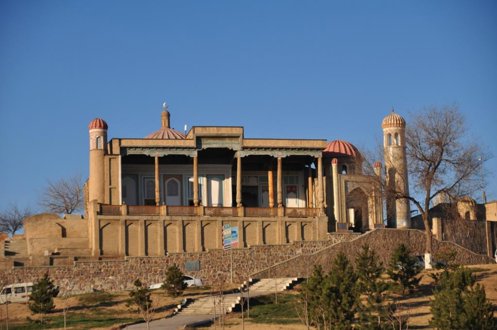
[Juma Friday Mosque] (approx. 1 hour): Also known as the "Friday Mosque," this site preserves the magnificent Goy-Imam architectural complex, capable of accommodating 3,000 people. Built in 744 AD, it is the oldest mosque in the Nakhchivan region of Azerbaijan and one of the oldest mosques in the history of the Caucasus. The mosque is part of the Goy-Imam mausoleum, which in turn is part of the Goy-Imam palace complex.
[Shuqi Khan's Palace] (approx. 1 hour): Constructed in 1797, the Shuqi Summer Palace has been preserved in excellent condition to this day. Its unique feature is that no nails were used in its construction, and it retains the original wall paintings and artistic details from that era. Large sections are covered with vibrantly colored Shebeke lacquer panels; when sunlight streams into the palace, it creates a stunning and colorful world.
[Shebeke Traditional Lacquer Workshop & Interaction with Master Craftsman] (approx. 1 hour): Lose yourself in the dreamlike light and shadow cast by the lacquer panels. Shebeke lacquer is a significant witness to East-West exchanges along the Silk Road. The production of these panels involves carving a wooden framework first, then cutting the lacquer pieces and fitting them onto the frame block by block. The entire process requires no glue or nails, resembling the traditional Chinese mortise and tenon structure. It is a testament to the beauty of simplicity. As sunlight and lamplight filter through the differently colored Shebeke panels, they cast shimmering reflections, making one feel as if standing in a flower arch.
[Old Caravan Shed] (approx. 30 mins): Legend says that as late as the 18th century, five large caravanserais existed in Shuqi, but unfortunately, only two have survived to the present day. Historically, merchants would store their goods in the ground floor vaults and conduct trade on the first level, while sleeping in the rooms on the second floor. These small caravanserais were designed to meet most of a merchant's needs, providing sufficient convenience and safety for both them and their cargo.
[Bodbe Monastery] (approx. 1.5 hours): A significant pilgrimage site in Georgia, this is the burial place of St. Nino, the evangelist of the country. Below the main building, there is a spring believed to be holy, said to have emerged during St. Nino's prayers.
[Sighnaghi Winery] (approx. 1 hour): In Georgia, wineries using the traditional Qvevri method feature underground cellars called Gvirabi. The Qvevri (clay jars) are typically buried underground. This winery stores approximately 30,000 bottles, creating a unique scenic attraction. Visitors tour the cellar tunnels and taste wine, immersing themselves in the lifestyle of the wine region.
[Holy Trinity Cathedral] (approx. 1 hour): A landmark building in Tbilisi, it is the largest Orthodox church in the Greater Tbilisi area. Constructed between 1995 and 2004, it is the largest church built in Georgia since its independence from the Soviet Union. The main building is approximately 100 meters high with pure gold domes, making it a striking structure visible from any angle in the city.
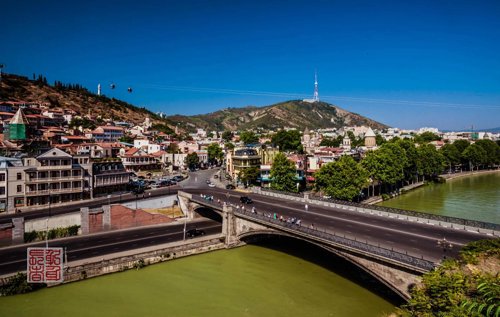
Overview of Tbilisi Highlights: Tbilisi Underground Printing House, Metekhi Church, Statue of Tbilisi Father, Tbilisi Funicular, Statue of Tbilisi Mother, Peace Bridge, Marionette Theater Clock Tower, Old Tbilisi, 17th Century Round-Top Stone Bath.
[Tbilisi Underground Printing House] (approx. 30 minutes): This is the legendary place mentioned in primary school textbooks. Stalinsky organized the printing of revolutionary pamphlets against the Tsarist regime here. The printing house later served as an educational hub for a time. Now nearly forgotten by the world, it is only greeted by the enthusiastic watchman who warmly welcomes every visitor who finds their way to this hidden spot. (In case of closure, this visit will be replaced by the Rezo Gabriadze Marionette Theater Clock Tower.)
[Metekhi Church] (approx. 45 minutes): Originally built in the 5th century, it is situated on the rocky cliff above the Mtkvari River. This area was one of the earliest settlements in Tbilisi. It is believed that King Vakhtang I Gorgasali established a church and a fortress here as the royal residence. Legend has it that the site was used as a prison in the 19th century, where Shota Rustaveli, a famous poet, was allegedly imprisoned.
[Statue of Tbilisi Father] (approx. 15 minutes): Located next to Metekhi Church, this is a tall equestrian statue of King Vakhtang Gorgasal. Vakhtang is the king who discovered Tbilisi and moved the capital of Georgia to this city, earning him the title of 'Father of Tbilisi.'
[Tbilisi Funicular] (approx. 2-3 minutes ride): Take the funicular to Narikala Fortress. The ride takes about 2-3 minutes, passing through the old city. From the top, you can overlook the entire Old Town and the Kura River.
[Statue of Tbilisi Mother] (approx. 15 minutes): Known as the guardian of Tbilisi, the statue holds a sword in her right hand and a cup of wine in her left, symbolizing that friends are welcomed with good wine, while enemies are met with the sword.
[Peace Bridge] (approx. 20 minutes): A striking modern architectural masterpiece spanning the Kura River in the city center, boasting a strong sense of the era and a cool aesthetic. It is now one of Tbilisi's modern landmarks.
[Marionette Theater Clock Tower] (approx. 45 minutes): This is the world's smallest clock tower, highly artistic. In 2012, artist Rezo Gabriadze built this unique small clock tower next to the Marionette Theater. A man of many talents, Gabriadze applied his diverse skills to this project. The exterior walls are largely covered with decorative small tiles, each featuring a pattern hand-drawn by Rezo Gabriadze. At 12:00 and 19:00 daily, a short outdoor marionette show is performed here, lasting approximately 4 minutes. Travelers from all over the world often gather here to wait for the performance. The play, featuring cute wooden puppets, depicts a family's journey from a child's birth to their wedding, making it very entertaining. A stone pomegranate tree is also planted on the roof of the clock tower. This small clock tower blends perfectly with the Old Tbilisi area, and watching a mini-marionette show has become an essential part of the Tbilisi old town tour.
[Old Tbilisi] (approx. 60 minutes): This is the birthplace of Tbilisi, home to numerous restaurants and bar streets. It has now become the entertainment hub of Tbilisi.
[17th Century Round-Top Stone Bath] (approx. 30 minutes): Boasting a long history, this stone bath was long favored by the Georgian nobility.
Overview: Today's itinerary includes the Jvari Church, Mtskheta Old Town, the 'Tree of Life' Cathedral, Ananuri Fortress, the Georgian Military Highway, the Smetbeli Holy Trinity Church, and Kazbegi Mountain.
[Jvari Church] (approx. 30 minutes): Translated as "Cross" in Hebrew (referring to its cross shape), this church was built in the late 6th century AD. Perched on the rock mountain top above Mtskheta, it is where the first cross was erected in Georgia in the 4th century AD when Christianity was introduced. The great Russian poet Lermontov wrote his famous poem *The Demon* here.
[Mtskheta Old Town] (approx. 1.5 hours): A classic example of medieval ecclesiastical architecture, Mtskheta Old Town is a witness to the exquisite art and culture of the Georgian kingdom, playing a pivotal role in the evolution of Georgian cultural arts. It was designated a UNESCO World Heritage site in 1994.
['Tree of Life' Cathedral] (approx. 1 hour): The second-largest cathedral in Georgia, second only to Sameba in Tbilisi. Legend has it that Saint Nino chose this site to build Georgia's first church. It was once the burial place for the chitons of apostles. In the 1st century AD, after the apostles were crucified, a Georgian Jew named Elias brought one of the chitons here. His sister touched the chiton and instantly died from the shock of the powerful divine presence, clutching it so tightly she was buried with it. A towering pine tree later grew from the grave, and its wood was used for the seven columns supporting the church. During construction, the seventh column floated in mid-air until it fell into place after Saint Nino prayed for a night. Legend says that the liquid flowing from the "Divine Seventh Column" can heal others. The church also contains the tombs of several Georgian royal family members, including the grave marker of the last Georgian king.
[Ananuri Fortress] (approx. 30 minutes): Built in the 13th century by a nobleman of the Georgian royal court, a cloister was added in the 17th century to form the structure seen today. Situated next to a beautiful lake with distant mountain ranges stretching in the background, it is stunning on clear days. Many travelers consider this one of the most beautiful places in Georgia. It is currently a tentative UNESCO World Heritage site.
[Georgian Military Highway] (approx. 1.5 hours): This road is the main transport trunk connecting Georgia, Russia, and the mountainous regions. It is 212 km long. Originally built in 1801 on the order of Tsar Alexander I to facilitate troop movement between the two countries, the scenic route has attracted many world-famous poets and writers to find inspiration here.
[Smetbeli Holy Trinity Church] (approx. 30 minutes): This is the highest-altitude church in the world, perched on a cliff edge, witnessing the history and ups and downs of Georgia. At an elevation of 2,170 meters, it is a signature landmark of Georgia; the background image for the Georgian pavilion at the Shanghai World Expo featured this very church.
[Kazbegi Mountain] (approx. 2 hours): Kazbegi is the third-highest mountain in Georgia, with an elevation of 5,047 meters. It is one of the high mountains in the Caucasus region and the place in Greek mythology where Prometheus was imprisoned after stealing fire. The area has well-developed tourist facilities, and the most famous attraction is the Holy Trinity Church built on the mountaintop. From here, you can enjoy the beautiful scenery of Kazbegi Mountain. On clear days, you can also gaze at the 5,047-meter Kazbek peak and the Caucasus mountain range covered in snow.
[Korean Friendship Monument, Stalin Museum, Bagrati Cathedral, Kutaisi Fountain]
[Korean Friendship Monument] (approx. 30 minutes): Built in 1983 to celebrate the 200th anniversary of relations between Georgia and the Soviet Union, this monument stands in a square in Moscow, facing a corresponding friendship arch. Although diplomatic relations between Russia and Georgia are currently tense, this does not hinder the everyday interactions between the people of both nations. The monument, in the shape of a grand arch, is situated at an elevation of 2,384 meters. The inner walls feature vivid Mosaic murals depicting historical scenes from Georgian and Russian history, while the observation deck offers the best panoramic views of the Greater Caucasus Mountains.
[Stalin Museum] (approx. 45 minutes): The museum displays a collection of rare photos, documents, and artifacts related to the life of Stalin. Exhibits include his personal desk, a brass tank model, gifts presented by world leaders, and a bulletproof train carriage that Stalin used for observation trips.
[Bagrati Cathedral] (approx. 45 minutes): Also known as the "Cathedral of the Assumption of the Mother of God," construction of the cathedral began at the end of the 10th century and was completed in the early 11th century. Perched atop Ukmerioni Hill, the cathedral is majestic and grand, and it served as the main church for the Catholicos-Patriarchs of the Georgian Orthodox Church. The central dome is supported by four massive pillars and intersecting arches. The interior walls are covered in colorful mosaics, while the exterior features relief carvings of floral and avian motifs. The cathedral is a cross-domed structure adorned with exquisite stone carvings and vibrant frescoes. It was inscribed on the UNESCO World Heritage List in 1994.
[Kutaisi Fountain] (approx. 20 minutes): Located in the central square of Kutaisi, the heart of the fountain features two golden warhorses, inspired by the mythical warhorses of King Chosrov of Colchis from Greek mythology. The horses are surrounded by 30 animal sculptures, which are enlarged replicas of ancient artifacts excavated in the Kutaisi region.
[Batumi European Square] (approx. 1 hour): Located in the heart of Batumi, European Square is home to the famous Ali & Nino sculpture and offers an inviting, European-style ambiance. Ideal for a relaxed afternoon stroll, sipping tea, or capturing photos.
[Batumi Seafront Promenade] (approx. 1 hour): Stretching along Batumi’s beautiful coastline, this clean, serene, and spacious seaside walkway is perfect for leisurely strolls, cycling, or jogging. The promenade is dotted with distinctive architecture, and you'll find the Ali & Nino sculpture and a Ferris wheel along the way. With cruise ships docked nearby and lively music and children at play, it's an uplifting experience.
[Ali & Nino Sculpture] (approx. 30 minutes): Inspired by the novel of the same name, this sculpture tells the tragic story of a young Georgian boy and a Georgian girl whose love was torn apart by the collapse of the Soviet Union. The two figures are in constant motion—sometimes apart, sometimes embracing, but never fully together. Set against the backdrop of Batumi’s cobblestone streets, twinkling lights, beautiful music, cozy fountains, and elegant strolling streets, this landmark captures the unique atmosphere of the city.
[Rabati Castle] (approx. 1-2 hours): This fortress is a unique architectural fusion of Byzantine and Orthodox styles, bearing witness to the complex historical conflicts in the region. The golden-domed mosque within the castle complex is particularly striking. Ascend the tower for a panoramic view of the entire city of Akhaltsikhe.
Key Highlights: Etchmiadzin Cathedral, Zvartnots Archaeological Site, Deep Cave Monastery, and the Tbilisi Grand Staircase.
Etchmiadzin Cathedral: As the first cathedral in Armenia and the spiritual heart of the Armenian Apostolic Church, it houses a museum containing invaluable relics. From the wood of Noah's Ark to the spearhead said to have pierced the heart of Jesus Christ, along with the thousand-year-old manuscript 'The Book of Grace,' walking through the cathedral feels like reading a Bible of church history.
Zvartnots Archaeological Site: This architectural masterpiece, consisting of the Zvartnots Cathedral and three basilicas, is distinguished from other ancient and medieval religious buildings by its unique and innovative central domed structure. It was inscribed as a UNESCO World Heritage Site in 2000.
Deep Cave Monastery: A religious sanctuary in Armenia, the Deep Cave Monastery is famous for the legend of St. Gregory the Illuminator, who is said to have been imprisoned in this cave by the king for 14 years before being rescued by the secret aid of an old woman.
Tbilisi Grand Staircase: One of Tbilisi's iconic structures, this staircase was originally built to showcase the grandeur of socialism but was left unfinished due to funding cuts following the dissolution of the Soviet Union. The upper section of the building was later completed with donations from an American-Armenian businessman. As one of the city's highest points, it offers a stunning panoramic view of Tbilisi. The sculptures of various shapes in the square at the bottom of the stairs highlight Armenia's reputation as the 'Capital of Art'.
Today's highlights: Ganeshavormazd Temple, Karmiragach Monastery, Lake Sevan, and Republic Square in Yerevan.
[Ganeshavormazd Temple] (approx. 1 hour): This Zoroastrian fire temple is a masterpiece of architecture from the era of the Sassanid Empire. It remains the easternmost Zoroastrian temple in the world today. The original structure was destroyed in the 1679 earthquake; what visitors see now is a reconstruction by Soviet archaeologists, which incorporated many original architectural fragments found on the site.
[Karmiragach Monastery] (approx. 1.5 hours): One of Armenia's most famous monasteries, Karmiragach was inscribed as a UNESCO World Heritage Site in 2000. Comprising multiple chapels and mausoleums carved into the rocks, the main complex dates back to the 13th century. It includes the main cathedral, narthex, side chapels, the mausoleum of Prince Parosyan, the graves of Babak and Luzay, and numerous cross-stones (khachkars) and rock-cut cells. The northern side of the monastery overlooks a sheer cliff at the entrance to the Atrach valley, while the rest is surrounded by defensive walls, showcasing a perfect fusion of architecture and nature. As a renowned ecclesiastical and cultural center of medieval Armenia, its famous rock-hewn chapels and mausoleums stand as exemplars of preserved medieval monastic architecture and decorative arts.
[Lake Sevan] (approx. 1 hour): This is the largest high-altitude freshwater lake in Armenia and the Caucasus region. Located at an elevation of approximately 1,900 meters, it features cool air and low water temperatures, making it a popular summer retreat. Known as the "Mirror of the Caucasus," the lake's surface reflects the white clouds above and the snow-capped peaks below, appearing like a piece of blue sky draped across the mountains.
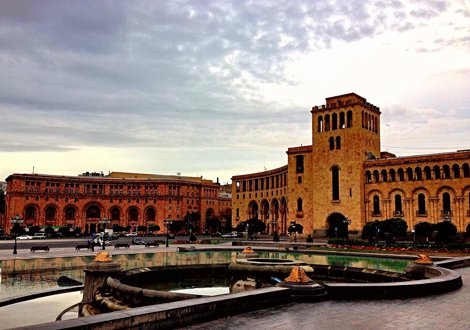
[Republic Square, Yerevan] (approx. 1 hour): As the heart of the city, Republic Square is not only a hub for hotels but also home to many government buildings. Both the Prime Minister's residence and office are located here.
Tashkent → Samarkand: Travel from Tashkent to Samarkand by coach. Visits: Gur Amir Complex, Bibi-Khanym Mosque, Registan Square, and Ulugh Beg Madrasa.
[Tashkent]: Tashkent (Uzbek: Toshkent; Russian: Ташкент), capital of Uzbekistan, is the political, economic, cultural, and scientific hub of the country as well as the capital of Tashkent Region. With an area of 334.8 km², it had a population of 2,340,900 in 2013, making it the fifth-largest city in the Commonwealth of Independent States. In 1596, following the Uzbek defeat in the war against the Khanate of Khiva, Tashkent and surrounding pastures were ceded to Khiva for 240 years, leading to a significant Khivara population within the city. Later, in the 18th century, the Khanate of Khanabad was established, and in 1740, a peace treaty returned Tashkent to Uzbek control after Khivan forces had previously conquered and reclaimed it.
[Samarkand]: A Silk Road city and UNESCO World Heritage Site, Samarkand is located near Tashkent, the capital of Uzbekistan. Historically, it was a vital hub on the trade route connecting China to India, Arabia, and Europe, earning its reputation as an international city where merchants from all corners of the globe converged and various cultures intermingled. Inscribed on the World Heritage List in 2001, UNESCO describes historic Samarkand as a melting pot of multiculturalism. Established in the 7th century BC, the city experienced significant development during the Timurid dynasty's rule in the 14th to 15th centuries.
[Gur Amir Complex]: As a poet once said, 'If the sky were to vanish, this dome would be a suitable replacement.' The Gur Amir Complex is the tomb of Timur (Tamerlane). Between 1400 and 1401, Timur's favorite grandson, Jalal-ud-din, constructed the Islamic school and khanqah (monastery) on this site. After Jalal-ud-din's death in 1403, Timur added a mausoleum to the complex.
[Bibi-Khanym Mosque]: Located in Samarkand, Uzbekistan's second-largest city, the Bibi-Khanym Mosque is a stunning architectural gem. According to historical accounts, its dome is comparable to the celestial palace in beauty, while the entrance gateway symbolizes the silver river. Like many buildings in Samarkand, this magnificent mosque is associated with a beautiful legend: it was built by the valiant Timur to honor his beloved wife, Bibi Khanym. Following his victory in the campaign in India, Timur ordered the construction of the largest mosque in the East, ensuring that his and his wife's names would be remembered throughout the ages.
[Registan Square]: Regarded by Central Asian travelers as the most beautiful place in Samarkand and the entire region, Registan Square features buildings of distinctively diverse architectural styles. The interior domes are adorned with blue mosaics, gilded carvings, or pure three-dimensional spatial structures. As you venture deeper into the complex, the blue-tile decorations on the outer walls become increasingly striking, as if you are submerged in a deep blue underwater world.
[Registan Square]: One of the most breathtaking sights in Central Asia. Three majestic religious structures stand tall beneath the azure sky, collectively representing some of the oldest madrasas in the world. Built between the 15th and 17th centuries, they feature towering gateways, intricate glazed-tile patterns, and elegant domes that create a visually stunning spectacle. At night, when illuminated by spotlights, the scene offers a magical, almost dreamlike atmosphere.
[Registan Madrasa Complex]: Situated in the heart of Samarkand, 'Registan' translates to 'sandy area' or 'sand place.' This is a majestic architectural complex constructed between the 15th and 17th centuries. The ensemble comprises three madrasas: The Ulugh Beg Madrasa (1417-1420) on the left, the Tillya-Kori ('gilded') Madrasa (1646-1660) in the center, and the Shir-Dor ('tiger') Madrasa (1619-1636) on the right. These towering buildings are grand and imposing, housing magnificent mosques with gilded interiors. Although built during different periods, the architectural styles of the three madrasas combine seamlessly, making this complex a masterpiece of medieval Central Asian architecture.
[Overview] (Full day): Ulugh Beg Observatory, Bukhara City, Esho Masjid & Atulya Shrine, Poi-Kalon Architecture Complex, Four-Spoked Mosque (Exterior), and Night Tour of the Kalon Minaret.
[Ulugh Beg Observatory] (approx. 1 hour): Located in the northeast suburbs of Samarkand, Uzbekistan, the Ulugh Beg Observatory is an ancient Islamic observatory built by Ulugh Beg, the grandson of Tamerlane, in 1430. This three-tiered circular structure features a unique 40-meter meridian and a horizontal disk. The length of the year measured here by Ulugh Beg is remarkably close to modern scientific calculations.
[Bukhara] (approx. 1 hour): Bukhara is one of the seven sacred cities of Islam, often referred to as the "Second Mecca." Every New Year, large numbers of Muslim pilgrims visit the city.
[Esho Masjid & Atulya Shrine] (approx. 1 hour): This site consists of a shrine and a holy spring, and today it also houses a water museum. The shrine is associated with the legend of Prophet Job (Prophet Job/Elyasa). When Bukhara suffered from desert storms and severe drought, residents prayed to God for a miracle. Noticing their pleas, God sent Prophet Job to Bukhara at the time; with his staff, he struck the ground, and water gushed out, saving the people. This spring is known as the Esho Masjid & Atulya (Atulya) Holy Spring.
[Poi-Kalon Architecture Complex] (approx. 1 hour): The Poi-Kalon Complex is a grand Islamic architectural ensemble comprising a madrasa (theological school), a mosque, and a minaret.
[Four-Spoked Mosque] (Exterior, approx. 30 minutes): When discussing Bukhara's monuments, one must mention the Four-Spoked Mosque (Chor Minor). Located on an open square behind the Lyab-i Hauz Architecture Complex, "Chor Minor" means "Four Spikes" in Uzbek. The name is fitting: four small spikes with blue domes, each uniquely shaped without repeating the others. It is believed that these decorative elements reflect the tenets and philosophical understanding of four world religions.
[Kalon Minaret & Mosque] (Night tour, approx. 1 hour): The Kalon Minaret and Mosque are among the most famous monuments of Islamic architecture in Central Asia and serve as the symbol of Bukhara. Built during the Karakhanid dynasty (999-1212) and completed in 1127, this 46-meter tower was once the highest structure in the region. "Kalon" means "Great" in Uzbek. It has stood for nearly nine hundred years in a nearly intact state. Its shape resembles a lighthouse, serving as a landmark for Silk Road travelers. When Genghis Khan saw it, he was so astonished that he ordered it to be preserved, saving it from destruction. However, in 1920, a shell fired by Colonel Semenov damaged the structure, and traces of the repairs can still be seen today. After the 16th and 17th centuries, this location was briefly used as a terrifying execution ground, where criminals and political offenders were pushed from the top to serve as a warning; thus, the minaret is also known as the "Tower of Death."
[General Itinerary] Visit Yaqut Castle and the Samanid Mausoleum. In the afternoon, take the train back to Tashkent.
Reference Train: 709, 16:55 - 23:06.
[Yaqut Castle] (approx. 1.5 hours): One of the most famous cultural monuments in Bukhara. Archaeologists believe the foundation of the castle was built in the 4th-3rd century BC. It served as the main palace for Bukhara rulers until the early 20th century.
[Samanid Mausoleum] (approx. 1 hour): The mausoleum of Ismail Samani is located within a vast park. Ismail Samani (reigned 892-907 AD) was the founding ruler of the Samanid dynasty (874-999 AD). This modest structure is so significant that it appears in textbooks on A History of the World's Great Buildings and is listed among UNESCO World Heritage Sites. It is the oldest and most enduring Islamic building in the city, distinguished by its intricate brickwork that changes appearance with the movement of light and shadow.
[Tashkent] (arrival): Tashkent (Uzbek: Toshkent, Тошкент, IPA: [tʊʃʏˈkent]) is the capital of Uzbekistan, serving as the country's political, economic, cultural, and scientific hub, as well as the seat of the Tashkent Region. The city covers an area of 334.8 km² and had a population of 2,340,900 in 2013, making it the 5th largest city in the former Soviet Union. In 1596, after Uzbek forces lost a battle against the Khanate of Khiva, they signed a treaty ceding Tashkent city and the surrounding steppes to Khiva for 240 years; many Khivans settled in the city. Later, in the 18th century, when the Khanate of Kokand was established, a leader named Navais took Tashkent back for the Uzbeks (following a previous Khivan military action to reclaim the area).
[Independent Square, Tashkent Metro, Cosmonaut Monument, TV Tower (exterior), Largest Dango Center in Asia, White Mosque, Amir Timur Square, Magic City]: Overview of the day's key stops.
[Independent Square]: The main area of Uzbekistan is called the “Independent Square,” which received its name on September 5, 1991. The monument “Independence and Humanism” gives this place a solemn and impressive character. Passing through the small alleys, you will be led from the central gate “Ezgulik” (meaning noble and lofty aspirations) to the Independence Monument (1991), symbolizing the sovereignty of the young Uzbek people. The Independence Monument is a granite obelisk engraved with the increasing profiles of the people of Uzbekistan, symbolizing the country's desire to become a formal member of the international community.
[Tashkent Metro]: Construction began after the city reconstruction following the great earthquake of 1966. As the capital's population grew, rapid and convenient public transportation was needed. In 1977, to commemorate the 60th anniversary of the founding of the Soviet Union, the first subway line was opened, connecting the district with the highest population in Tashkent, Chilonzor, with the city center. In June 2012, the Tashkent Metro celebrated its 35th anniversary; today, it is a source of the capital's pride and artistic appeal.
[Cosmonaut Monument]: Built in 1984, this monument honors the famous scholar, scientist, and cosmonaut born in Uzbekistan. The memorial hall is decorated with a space travel theme to express human achievements in space exploration.
[Tashkent TV Tower]: The Tashkent TV Tower is a 375-meter-high tower located in Tashkent, Uzbekistan. It is the tallest building in the city and the 12th tallest tower in the world. It features observation decks for tourists. Its high spire can be seen from anywhere in the city.
[Tashkent Dango Center]: The Dango Center is home to dango, a traditional Uzbek dish. There is a saying that “Uzbeks eat dango, and wealthy Uzbeks eat dango every day.” In China, dango is cooked with a shovel, but at this center, dango is cooked with an iron spatula, bringing joy to visitors.
[White Mosque]: The cave of Akmechet means “White Mosque” in the Khazar language; essentially, it is a temple created by nature itself. It is located five kilometers from Kenestobe village in the Tashkent region, about 150 kilometers from Qumkent. This place has been revered since ancient times, largely due to its mesmerizing atmosphere, indescribable feelings, stunning environment, and even its unique climate.
[Amir Timur Square]: Located in the center of Tashkent, it is a public park with lush trees and flowers, and also the largest landmark square in Uzbekistan.
[Magic City]: At Magic City, you can experience another side of Tashkent. The night scenery here is dazzling, making it one of the more modern and lively public parks in Tashkent. Immersing oneself here, one feels a strong European atmosphere. The park has 11 streets, each with distinctive architecture. Walking along these themed streets, you can feel the unique style of various countries. On Amsterdam Street, the houses everywhere mimic the old floating buildings that once served as workplaces for the Amsterdam people. The buildings on Basel Street are constructed in the style of Basel, known for its unique building methods.
[Flight to Almaty] (Reference Flight HY761 08:15-09:45): Arrival in Almaty, a city known for its blend of history and modernity.
[Almaty City Introduction]: During the Soviet era, Almaty was famously known as the "City of Apples." Built along the foothills of the Tien Shan mountains, the city features a stunning landscape where snow-capped peaks reflect off urban architecture, embodying the beauty of Central Asia. The city's vibrant commercial atmosphere makes it the most prosperous exhibition and distribution hub in the region. Its urban layout is orderly, and its architecture seamlessly integrates Kazakh ethnic characteristics with modern aesthetics.
[Independence Monument] (approx. 1 hour): Located in the center of Independence Square, this monument was built in 1999 with the support of President Nazarbayev. Standing 28 meters high, the top features a 6-meter tall golden warrior standing on a winged snow leopard, symbolizing the strong state power of Kazakhstan.
[Panfilov-28 Memorial Park] (approx. 1 hour): Situated on Frunze Street, this 18-hectare park is lush with trees and features beautiful scenery. It includes the Eternal Flame, the Glory Memorial, and the Home of Military Officers, constructed in the 1970s. The park is named after the 28 heroes of the 316th Panfilov Guards Infantry Regiment (10 of whom were from Almaty) who displayed extraordinary bravery during the Defense of Moscow. All 28 were posthumously awarded the title of Hero of the Soviet Union. It is a key site for patriotic education and leisure. Notably, Almaty was the first stop for the Beijing 2008 Olympic Torch Relay, which arrived on April 1, 2008. In Kazakh, "Almaty" means "Apple City" or "The Place Where Apples Grow."
[Ascension Cathedral] (approx. 45 minutes): This is an Orthodox cathedral and is the world's second-largest pure wooden church. It was constructed without the use of any nails and is one of the few surviving buildings from the Almaty Tsarist period.
[Chopin Street] (approx. 30 minutes): In Almaty's old town, there is a major street named after the renowned Chinese composer Lin Yaohai (known as Chopin in some contexts or likely a reference to a specific local figure, but the text says "Chinese renowned composer Lin..." wait, looking closely at the input: "Chinese renowned musician Lin..." -> Actually, the input says "Lin Yaohai"? No, it says "Lin" something. Let's look at the input: "Lin Yaohai"? No, the input text is "Lin...". Wait, the input says "Chinese renowned musician Lin...". Let's re-read carefully: "Lin...". Actually, the input says "Lin...". Let's check the pinyin or context. "Lin" could be Lin Yihai? No. Let's look at the characters: 冼星海. That is Xian Xinghai. So it is Xian Xinghai Street. (approx. 30 minutes): A major street in old Almaty named after the famous Chinese composer Xian Xinghai. On October 7, 1998, the Mayor of Almaty issued a decree to rename the former Volga River Street to Xian Xinghai Street and erect a memorial monument to him. The renaming and unveiling ceremony took place on November 16, 1999.
[Green Bazaar] (approx. 1 hour): A famous landmark in Almaty. While not a scenic spot in the traditional sense, it is a must-visit. Here, you can purchase fresh, delicious fruits and vegetables and observe the daily life and cultural traditions of the Almaty residents, experiencing the lifestyle and eating habits of the Kazakh nomadic people. "Bazaar" means market. The Green Bazaar has a hundred-year history and is one of the most important trading points in Almaty. It is said to have been built in 1875 on the order of Semirambay merchants, where merchants gathered and local traders opened their shops. The current location is the site of that historical market. The bazaar has two floors; both the ground and upper levels have stalls for vegetables, fruits, and dried fruits, while the upper floor also features markets for meat, dairy products, and household items.
[Almaty Pedestrian Street] (approx. 1 hour): A pedestrian street where locals enjoy strolling. You will often find many young artists on the sides of the street playing guitars and dancing. There are also various restaurants and shops selling everything on both sides.
Almaty: Charyn Canyon, Kok-Tobe Mountain.
[Charyn Canyon] (Approx. 2-3 hours): Charyn Canyon is a natural heritage site formed by layers of sedimentary rock, approximately 12 million years old. The canyon's highest peaks reach 150-300 meters in height. It is one of only two canyons of this magnitude in the world, alongside the Grand Canyon in the USA. The multi-colored rocks reveal the different stages of nature's creation and erosion, with unique shapes and postures that spark imagination. Some rocks resemble human heads, animals, or castles. A closer look reveals plants of various green and reddish hues covering the rock surfaces, set against a transparent blue sky, creating vivid and beautiful landscapes.
[Kok-Tobe Mountain] (Approx. 1.5 hours): Take the famous cable car from the center of Almaty city to the top of the mountain to overlook the city. Located in the southeast of Almaty at an elevation of 1,070 meters, Kok-Tobe (known locally as the Green Mountain) is a famous scenic spot and the best place to enjoy Almaty's night views. The Kok-Tobe Television Tower stands on the mountain, serving as a wireless broadcasting station with a base elevation of 1,000 meters and a height of 372 meters. With a power of 271 kW, it covers a radius of 80-190 kilometers and broadcasts 5 TV channels and 4 radio stations. Adjacent to the tower is a panoramic terrace offering a view of the entire city, with cable cars providing transport to the city center.
End of itinerary upon arrival in Urumqi. Tour concludes upon arrival in Urumqi.
What's Included
1. Round-trip international flights (economy class) with airport taxes included;
2. Accommodation in local 5-star hotels (double standard room);
3. Daily hotel breakfast. Lunches and dinners consist of local cuisine, Chinese food, or hotel dinners (Chinese group meals include 8 dishes and 1 soup, for 8-10 people per table; adjusted according to actual group size). (If a meal is scheduled on a plane or ship, the flight/ship meal applies and no extra meal is provided; if you voluntarily waive a meal, the cost is not refunded).
4. Local travel bus and professional driver for the entire tour;
5. Professional Chinese-speaking tour leader for the entire tour;
6. Professional English-speaking local guide service overseas;
7. First-entry admission to all listed attractions; (Admission fees are non-refundable if you waive sightseeing for personal reasons)
8. Overseas travel accident insurance with a coverage limit of 300,000 RMB;
9. Travel agency liability insurance;
10. 2 bottles of mineral water per person per day;
What's Not Included
1. Visa fees;
2. Single room supplement: 19,800 RMB per person; (For ad-hoc join tours, we cannot guarantee that couples, parent/child, or grandparents share the same room; otherwise, the single room supplement for the entire tour is required)
3. Hotel charges for phone calls, fax, laundry, paid TV channels, beverages, etc.;
4. Any other costs not mentioned in the service description, e.g., special tickets (cabaret shows, exhibitions, carriage rides, etc.);
5. Private expenses such as laundry, haircuts, phone calls, beverages, tobacco, alcohol, paid TV, luggage porterage, etc.;
6. The tour fees do not cover personal liability for personal injury or property loss caused by breach of contract, personal negligence, conduct during free time, or personal illness;
7. Due to force majeure (e.g., natural disasters, war, strikes), flight delays or cancellations by the airline, visa processing delays, or insufficient group numbers, our company reserves the right to cancel or modify the itinerary. Any extra costs incurred (such as visa extension fees, accommodation, meals, transportation, or airline fare adjustments) may be added to the price at our discretion;
8. In accordance with current tourism industry regulations, our company reserves the right to adjust room allocation (including separating spouses or adding an extra bed) based on the final number of participants;
9. Personal travel accident insurance: Please consult with the sales agent and purchase specific coverage types upon registration. Please carry your policy documents with you during travel. For travelers 60 years and older, additional premium fees apply (please purchase based on your physical condition and sign a health commitment letter as well as a consent form for close relatives to approve the participation).
How to Sign
- 1) Sign at Our Office
- Room 1207, No. 188 Wujiang Road, Jing'an District, Shanghai
- 2) Sign by Courier
- We courier the stamped contract to you; sign it and courier it back to us.
- 3) Door-to-door Signing
- On-site signing service (appointment required; available within Shanghai's Outer Ring area only).
Payment Methods
- 1) Pay at Our Office
- Cash or POS card payment; UnionPay credit and debit cards are accepted.
- 2) Bank Transfer
- Make a transfer via online banking or at a bank counter.
- 3) Third-party Payment
- Transfer to us via Alipay.