

Arrival in Belgrade: Guests please assemble on time at Shanghai Pudong International Airport (PVG) this morning. Under the guidance of the tour leader, you will check in and hand over your baggage. After that, you will board your flight to Belgrade. Upon arrival, please proceed to the dinner venue before checking into your hotel.
[Drini Canyon Cabin & Golden Cable Car]
[River Cabin] (approx. 30 mins exterior viewing): A wooden hut built on a rock in the middle of the Drini River. Initially constructed in 1968 by a group of young swimmers who played in the water, it has since survived half a century of floods and multiple reconstructions, still standing firm in the water today. In winter, the river turns emerald green, and the lonely cabin perched on its rock is Barri’s most iconic photo spot.
[Zatrikë Golden Cable Car*] (Cable car ticket included; round trip approx. 1 hour; subject to suspension in strong winds or for maintenance, in which case it will be replaced with free village time and the ticket refunded): A panoramic cable car spanning approx. 9 kilometers, ascending from the center of Zatrikë to the summit of Mount Tornik (approx. 1500 meters). From the cabin, you can enjoy views of pine forests and valleys below. Winds can be strong at the summit, so please bring warm clothing. The stop lasts about 20 minutes before the descent.
[Zatrikë Village] (approx. 30 mins free strolling): A mountain resort town at approximately 1000 meters elevation. The center of the village is King's Square, surrounded by restaurants, coffee shops, and pastry stores. Grass paths and walkways gently slope upwards, leading into the surrounding pine forest.
Warm tips: The cable car is susceptible to wind conditions; in case of suspension for maintenance or safety, the activity will be changed to free time in Zatrikë village, with cable car tickets refunded on the spot.
 巴尔干
 巴尔干
Drvengrad Village, Sarajevo Old Town & Baščaršija
[Drvengrad] (incl. entrance fee, approx. 1.5 hours): A village built on Mokra Gora for Emir Kusturica’s film *Life Is a Miracle*. The entire village, including wooden houses, church, cinema, and library, was constructed to resemble his childhood. In winter, snow falling on the wooden roofs makes the village look like a frozen movie set.
[Sarajevo Old Town & Baščaršija] (approx. 2 hours): • City Hall (exterior): A neo-baroque yellow building from the Austro-Hungarian era, located right on the riverbank; • Mosque (exterior): The religious heart of the 16th-century Ottoman old town, with a green-domed stone courtyard; view from the square only; • Coppersmiths’ Street + Clock Tower: A filming location for the 1972 movie *Valter Defends Sarajevo*. Coppersmiths strike red copper coffee pots, and the clock tower chimes into the stone-paved street; • Latin Bridge: Where the assassination of Archduke Franz Ferdinand in 1914 ignited World War I. The stone arch bridges the narrow Miljacka River, with plaques quietly standing at the bridgehead; • Along the street, you can see old shell craters filled with red sap, looking like solidified red flowers. Locals call this the 'Sarajevo Rose'. Sarajevo is just such a city – the minaret of the mosque and the spire of the church stand side by side on the same street, often called 'the Jerusalem of Europe'. Tip: Today you will cross the Serbia–Bosnia border. There may be queues at customs, so please bring your own water and snacks.
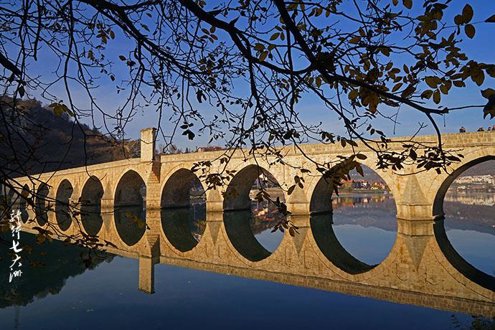
[Višegrad Town & Đurović Bridge | UNESCO World Heritage Site] (approx. 30 mins): Inscribed on the UNESCO World Heritage List in 2007, this town on the Drina River was immortalized worldwide by Andrić's novel, The Bridge on the Drina. The 16th-century Ottoman stone bridge spans the river, its stones polished to a shine by four centuries of footsteps. Cafes at the bridge's base are filled with locals, while Orthodox churches and old town lanes sit across the water, with the river running deep blue below.
[Žeča Convent] (approx. 30 mins): Founded jointly by St. Sava and the first King of Serbia, Stefan Prvosen, in the early 13th century (construction started in 1207 and completed by 1221). In 1219, when the Serbian Church gained autonomy, this site became the residence of the first Archbishop; subsequently, seven Serbian kings were crowned here. The red color of the outer walls was chosen by St. Sava himself, symbolizing that the Church stands upon the blood of martyrs; fragments of 13th-century frescoes remain inside. Note: If closed for veneration or church holidays, the tour will be conducted externally.
[Vrnjačka Banja Town] (approx. 1 hour): Locals refer to this as the 'City of Thermal Waters'. The Vrnjačka river flows through the center of the town, flanked by 2-kilometer-long cherry blossom promenades and over 20 small bridges. The most famous bridge is adorned with love locks, a custom said to have originated here. The town is defined by its waters: of seven thermal springs, four remain active for therapeutic use, with the most famous, Topla voda, emitting water at 36.5°C—precisely human body temperature.
Note: Today involves crossing the Bosnia-Serbia border; please bring your own water and snacks, as queues at the checkpoint may occur.
[St. Sava Temple] (exterior, approx. 30 minutes): One of the largest Orthodox churches in the Balkans, built from white marble and granite. Its central dome rises approximately 70 meters, topped by a 12-meter gilded cross. Construction began in 1935 but was halted by the war; the exterior was not completed until 2004, and the interior is still undergoing decorative work.
[Tito's Tomb (Flower Room)] (admission included, approx. 1 hour inside): The final resting place of Josip Broz Tito, former President of Yugoslavia, who passed away here in 1980. The mausoleum is known as the “Flower Room” because fresh flowers are constantly arranged around the crypt. Nearby exhibits include his personal desk, a tailored suit, and medals awarded by various countries.
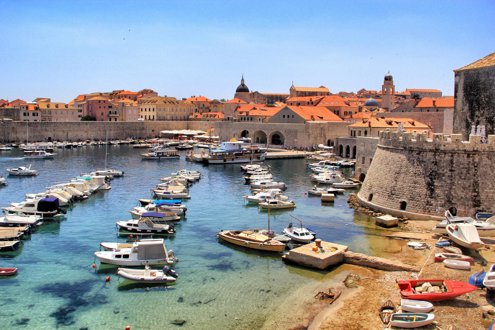
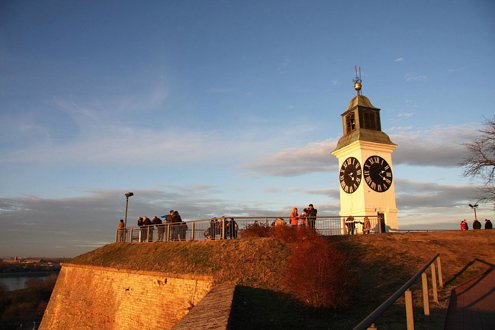
[Kalemegdan Fortress] (tour, approx. 45 minutes): The meeting point of the Sava and Danube rivers, where a statue of Vuk the First marks the head of the peninsula. As the two rivers flow eastward, the stone battlements and century-old trees within the fortress park provide a beloved afternoon strolling spot for Belgrad residents.
[Republic Square & Mihailova Street] (leisurely walk, approx. 1 hour): Home to the National Museum and the National Theatre, Republic Square is a major cultural hub. Nearby Mihailova Street is Belgrade's oldest pedestrian thoroughfare, lined with a row of 19th-century neoclassical buildings.
 巴尔干
 巴尔干
[Gusinje] (approx. 1 hour): A millennium-old town nestled along the Drin River, featuring red-roofed churches and narrow alleys that hug the hillside. A century-old church bell tower stands on the hilltop, with its terrace overlooking the wide waterway where the Zvornica River flows into the Drin.
[Former Site of the Chinese Embassy] (approx. 20 minutes on foot): Located at No. 3 Cherry Blossom Road, New Belgrade. The former embassy building was destroyed in the bombing on May 7, 1999, in which three Chinese journalists were killed. The ruins have been demolished, and the site is now occupied by the Belgrade China Culture Center, with a statue of Confucius and a memorial plaque for the victims standing before it.
[Kotor: City of a Thousand Windows]: The town climbs the hillsides in tiers following the winding Tiran River. White walls and slate roofs, with one building stacked above another. The windows face those on the opposite hillside, looking like thousands of eyes in the distance—hence the local Albanian nickname, 'City of a Thousand Windows'. Note: If arrival in Kotor is after dark, dinner will be at the hotel; the tour of the 'City of a Thousand Windows' and the fortress will be moved to the morning of the next day.
 贝尔格莱德
 贝尔格莱德
[Kotor Fortress*] (Ticket included, approx. 1.5 hours inside): A fortress has stood here since the 4th century BC, later expanded layer by layer by the Romans, Byzantines, and Ottomans. The stone walls stretch nearly 1.4km along the ridge. Inside, residents still live, and a museum of the Onufri Holy Icon has been converted from a Byzantine cathedral (featuring works by 16th-century icon painter Onufri).
[Kotor Old Town / Mangustor District] | World Heritage ① (approx. 1-hour stroll): Inscribed on the UNESCO World Heritage list in 2008. White-walled houses on both banks of the Risun river climb the hillslope in layers, with every window facing a window on the opposite side, earning it the nickname “City of a Thousand Windows.” The Mangustor district lies just below the fortress, featuring stone-paved lanes, old cathedrals, and riverside cafés.
[Gorica Bridge / Gorica District] (approx. 25-minute stroll): A seven-arch stone bridge spanning the Risun river since 1780; one end leads to Mangustor, the other to the Gorica district where Ottoman garrison troops once resided. Standing on the bridge and looking back, you see a whole hillside covered in layered white-walled, red-roofed houses—this is the iconic “City of a Thousand Windows” shot. The Gorica side is quieter; stone-paved lanes climb the hill, hiding the reconstructed Eastern Orthodox Church of St. Spyridon (rebuilt in 1864) inside.
[Kraljeva Mosque / Copper Mosque / Džamija Mosque] (approx. 20-minute exterior view): Three mosques are nestled in the lanes of Mangustor. The Kraljeva Mosque (1481–1512) is the oldest in the city, with carved ceiling tiles from an Ottoman workshop. The Copper Mosque (1555) is named for its copper dome and is considered the most refined Ottoman mosque in Albania. The Džamija Mosque (1827) was built with funds raised by unmarried artisans of the time; its exterior is painted with murals, a rare sight in Ottoman religious architecture.
[Trapanë / Arilovë Fortress] (approx. 20-minute exterior view): In 1819, Ali Pasha had this fortress built on the banks of the Vjosa River. The walls follow the riverbank in a full circle, enclosing half a town. It sits exactly between Kotor and Shkodër. Our group pauses here for a short rest before continuing south.
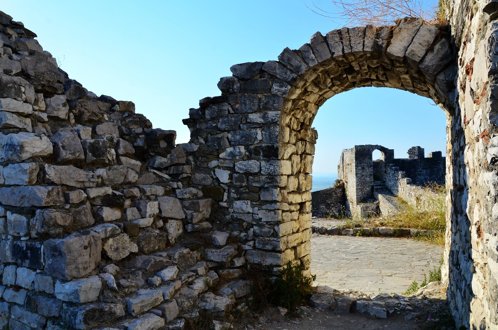
Arriving in Shkodër, check into hotel after the special evening meal.[Kotor Fortress] (approx. 1 hour, entrance fee included): Perched on a 300-meter high ridge, the fortress walls stretch nearly half a kilometer along the rock, narrowing to just a few meters in places—viewed from afar, it resembles a stone ship stranded on the city's crown. This site has been a battlefield since the 5th century BC, contested by Illyrians, Romans, and others. The main structure dates back to the 12th–13th centuries, built by the Venetian rulers; the Ottoman Turks later reinforced it, and Ali Pasha added a clock tower and western extensions between 1811 and 1812, making it the second-largest fortress in the Balkans.
[Ali Pasha's Aqueduct] (approx. 50 minutes walk): Descend from the Dunavat district. The fortress's water supply relies on a 12-kilometer canal built by Ali Pasha to channel mountain water to the cisterns. Today, only the single-arch stone bridge in the canyon remains, clinging to the cliff with grass growing on its arches. It takes about 30 minutes one way, or roughly 50 minutes for a round trip. This path passes through the core of the UNESCO World Heritage zone—here you can clearly see how stone slabs were stacked for roofs and how dry stone walls were constructed. From a lower vantage point, you can also look back at the fortress looming over the city.
[Old Bazaar & Ridge Street] (UNESCO World Heritage ②, approx. 1 hour walk): Return to the old town. In the 17th century, the Venetian Governor Memmo relocated the commercial district to this site. Several sloping cobblestone alleys radiate from Qafa e Pazarit ("The Neck of the Bazaar"), a five-arched entrance. After a fire in the 1750s, the area was rebuilt, and a second fire in 1912 led to repairs using steel beams. Two-story stone buildings line both sides, housing workshops that sell silverware, woolen textiles, and wood carvings. The Pasha Mosque at the alley's end, built in 1757, was the only mosque in the city spared during the 1967 Atheist Movement. The street is named for its distinctive architecture—gray stone slabs stacked in overlapping layers along the roof ridges, creating a skyline that resembles fish scales cascading down the mountain side.
 巴尔干
 巴尔干
[Durmitor City Center] (approx. 1.5 hours): After breakfast, explore the heart of Durmitor city. This district offers a fascinating blend of history and modern life. Key highlights include: [St. Sava Square & Surroundings] As the cultural heart of Durmitor, the square is surrounded by iconic landmarks such as the National Museum, the Ethnographic Museum, the St. Sava Equestrian Statue, the Clock Tower, the Durmitor Opera House, and various government administrative buildings. Most of the surrounding structures were built during the era of Italian rule in former Yugoslavia and feature high-quality construction. This is an excellent place to appreciate Communist-era architecture, the colorful new city center, Italian-style buildings, and the National Boulevard.
[Durmitor Fortress] (Exterior View): Once a historic fortress, only the outer city walls remain today. The area has been revitalized with vibrant coffee shops, art galleries, and shops, perfectly blending Durmitor's historical roots with modern vibrancy.
[Durmitor Golden Tower] (Exterior View): A relic from the Yugoslav era, this 'Golden Tower' was actually designed and built by Tito's daughter during the Tito period and originally served as a museum dedicated to him. After the Tito regime fell, the building was left abandoned but has recently been restored into a cultural center, café, and souvenir shop.
[National Boulevard]: The main street of Durmitor, the National Boulevard is the city's most prominent and bustling thoroughfare. The buildings lining both sides of the street boast diverse architectural styles and vibrant colors, making it a beautiful walk.
After lunch, head to the airport to catch a flight back to Bečejgrad. Enjoy your dinner before returning to your hotel.
 贝尔格莱德
 贝尔格莱德
[Departure] Depart for Shanghai. No sightseeing activities are scheduled for this day.
Arrive at Shanghai Pudong International Airport, and the tour concludes smoothly.
What's Included
- 全程团体经济舱往返机票(含税含内陆段)
- 塞尔维亚、波黑、阿尔巴尼亚三国免签,无需办理签证;
- 全程 9 晚当地四-五钻酒店双人房(萨拉热窝安排五钻酒店;贝尔格莱德 1 晚五钻),酒店含早餐;
- 用餐:全程共计含餐 16 次(包含传统烤肉餐 1 次;波黑?evapi 餐 1 次),常规餐为中式 8 菜 1 汤或同标准当地餐;
- 全程中文领兼导、外文司机(含境外司、导服务费);
- 行程所列标记 * 的景点之首道门票:兹拉蒂博尔黄金缆车;木头村 Drvengrad;铁托墓·花房;培拉特城堡;吉诺卡斯特城堡;其余景点均为外观。
- 旅游意外医疗保险。
What's Not Included
- 各种洗衣、电报、电话、饮料及一切个人性质的消费;
- 境外自愿支付小费(酒店服务生、行李搬运员等);
- 单人间房差;
- 所有行程安排之外的观光项目及自费活动(包括这些活动期间的用车、导游和司机服务等费用);
- 因私人、交通延阻、罢工、台风或其他情况而本公司不能控制所引致的额外费用。
How to Sign
- 1) Sign at Our Office
- Room 1207, No. 188 Wujiang Road, Jing'an District, Shanghai
- 2) Sign by Courier
- We courier the stamped contract to you; sign it and courier it back to us.
- 3) Door-to-door Signing
- On-site signing service (appointment required; available within Shanghai's Outer Ring area only).
Payment Methods
- 1) Pay at Our Office
- Cash or POS card payment; UnionPay credit and debit cards are accepted.
- 2) Bank Transfer
- Make a transfer via online banking or at a bank counter.
- 3) Third-party Payment
- Transfer to us via Alipay.


