
[Shanghai Pudong International Airport] (Departure Time): Guests are requested to assemble at the designated check-in time and board the flight to Tbilisi.
[Munich City Tour] (approx. 2 hours total): Munich is one of Europe's most opulent and modern cities, yet it retains its traditional rustic charm. Renowned as Germany's "Palace Capital," its long history imbues the city with a rich cultural atmosphere and royal elegance.
[BMW Museum] (Interior access, approx. 1 hour): Located in the BMW Headquarters campus in northern Munich, adjacent to the iconic BMW Tower (an eight-spire architectural marvel). Originally opened in 1972 for the Munich Olympics, the museum was re-inaugurated in 2008 after a major renovation. It is the core venue showcasing BMW's century of history, automotive technology, and future vision. The historical classics exhibit features iconic models from the brand's inception to the present day, including early aviation engines (BMW began as an aircraft engine manufacturer), vintage motorcycles, classic cars, and racing vehicles. Legendary models such as the BMW 328 and BMW 507 are displayed, clearly illustrating the brand's evolutionary lineage.
[Munich New Town Hall] (approx. 30 minutes): Situated on Marienplatz, this Neo-Gothic building was constructed between 1867 and 1909. The facade is adorned with statues of Bavarian kings, legendary heroes, and saints.
[Marienplatz] (approx. 30 minutes): Located in central Munich, this is a famous leisure square. Visitors can admire the historic architecture surrounding the plaza and enjoy meals at local restaurants to experience authentic German ambiance.
 宝马博物馆
 慕尼黑
 慕尼黑新市政厅
[Neuschwanstein Castle] (approx. 2.5 hours round trip, admission included): Among the many castles in the region, Dürenheim is renowned for the southern castle of Neuschwanstein, also known as the White Swan Castle, which is considered a symbol of Germany. This place, resembling a heavenly realm on earth, is steeped in ancient folk legends about magic, kings, and knights. It was built by King Ludwig II of Bavaria, who personally participated in the design of this castle. It features a large number of German swan sculptures, and he envisioned it to be a castle out of a fairy tale. As the white castle stands high on a hill, surrounded by mountains and lakes, it offers diverse scenic beauty in all four seasons.
[Wieskirche Church] (approx. 30 minutes inside): Located in Steingaden, at the southern end of the famous Romantic Road in Germany, stands a Baroque church—the Wieskirche, whose full name is “Church of the Visitation of the Blessed Virgin Mary.” This church with red roofs and white walls is situated on a lush green pasture, nestled at the foot of the blue-grey Alps in the northern mountain range, making it particularly captivating. The interior of the church features a magnificent Rococo style. As a miniature of the Bavarian Rococo church, the Wieskirche reflects the harmonious unity of nature and architectural art, and it was designated as a UNESCO World Cultural Heritage site in 1983.
 慕尼黑
 慕尼黑
[Rothenburg ob der Tauber] (approx. 1 hour): The spiritual convergence point of the three classic routes – 'Romantic Road', 'Castle Road', and 'Fairy Tale Road' – and Germany's most globally recognized medieval landmark.
Tour of Rothenburg City:
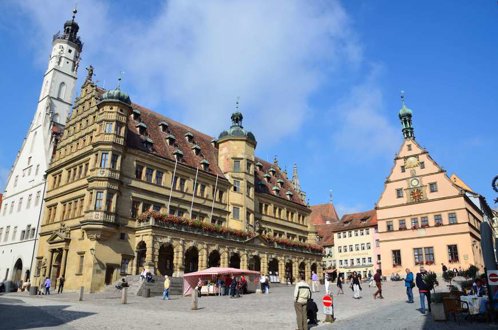
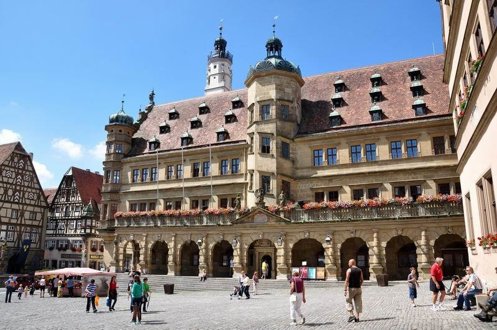
Pflaumgarten Square and Market Square: The characteristic squares of Rothenburg, featuring the medieval-looking Marktgasse Tower and the Council House with its legendary colorful facades. Stroll through the castle gardens.
Pfenniggasse / Plönlein (Exterior View): Plönlein is a must-see on every visitor's itinerary. Many believe 'Plönlein' refers only to the yellow half-timbered houses. However, translated directly, it means 'the small place by the mill fountain,' which actually includes the mill fountain in front of the little yellow wooden house and two towers of the old city wall.
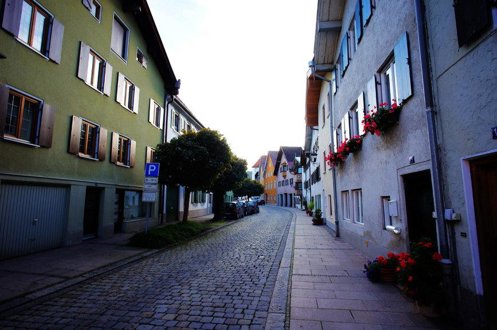
Old Town: Stroll through the quaint, ancient streets of Rothenburg, walking along the cobblestone paths that wind up and down. On either side stand undamaged Gothic and Renaissance-style buildings. Enter the winding arcades; every clock tower and every alleyway holds a story, extending a segment of history.
[Nuremberg] (City Tour approx. 1 hour): Nuremberg is a vibrant metropolis full of medieval charm. It was here that the Nuremberg Trials were held after WWII to try Nazi war criminals. Once a center for German toy manufacturing, it is renowned as the 'Toy Capital of the World.' It is also the birthplace of world-famous corporations like Siemens and the Adidas brand.
Tour of Nuremberg City:
Cathedral of St. Sebastian (Exterior View): Pope IV feared that thieves might steal his treasures, so he established this cathedral as a secure vault.
Imperial Castle (Exterior View): The most iconic medieval building in the area, representing the divine authority of the Holy Roman Empire and the importance of Nuremberg as an Imperial Free City.
Main Market: The heartbeat of the city. The Main Market Fountain (Exterior View), a 14th-century Gothic fountain, stands approximately 19 meters high, adorned with 40 colorful statues symbolizing the religious and political system of the Holy Roman Empire.
[Nuremberg Christmas Market]: One of the most famous and longest-running Christmas markets in Germany and Europe, dating back to the 16th century. It is known as the 'Mother of all Christmas Markets.' The main venue is the Hauptmarkt, where the ceremonial opening is hosted by the symbolic 'Christkind' (Baby Jesus). Stalls are neatly aligned, offering classic hot mulled wine, bratwurst (a local specialty), handmade ornaments, and wooden toys. In the center of the square, a giant Christmas tree glows with sparkling lights, while the surrounding Gothic churches and old buildings look especially magnificent under the illumination.
Special Arrangement: Tasting of hot mulled wine.
 罗滕堡
 浪漫之路
 纽伦堡
Leipzig, known as the 'City of Music,' boasts a rich musical heritage. Johann Sebastian Bach served as the Thomaskantor here, making it one of his most significant workplaces. The city was also the birthplace of other renowned composers, including Felix Mendelssohn and Robert Schumann.
Leipzig City Tour (approx. 1 hour total):
Leipzig Battle Memorial (Exterior): One of Europe's largest memorials, commemorating the Battle of Leipzig in 1813, this building is a symbol of historical significance.
Leipzig Town Hall (Exterior): Originally built in 1556 and destroyed during World War II, the current structure is a post-war reconstruction. Its elegant appearance makes it a highlight of German Art Nouveau architecture.
Leipzig Opera House (Exterior): Founded in 1693, it is the third-oldest opera house in Europe.
Thomaskirche (St. Thomas Church) (Exterior): A prominent Lutheran church in Leipzig, Germany. It is most famous for serving as the church where J.S. Bach served as the director of the choir for many years; his remains are interred here.
Zittau Christmas Market: One of Germany's oldest Christmas markets, with a history dating back to 1434. Initially authorized by Emperor Sigismund as a one-day meat market, it has evolved into a grand festival lasting the entire Advent season. It is the perfect place to shop, indulge in local delicacies, and experience the traditional Saxon festive atmosphere.
Special Arrangement: Taste unique gingerbread gingerbread cakes.
 德累斯顿
 纽伦堡
[Potsdam City Tour] (approx. 60 minutes total): Potsdam is located on the banks of the beautiful Havel River in northeastern Germany. Known as the "Florence on the North Elbe," the city boasts a rich cultural heritage and majestic Baroque architecture. Blending history with modernity, Potsam is home to a vibrant tradition in arts, architecture, and music. Its Baroque masterpieces are among the most famous palaces in Europe, with designs inspired by France's Palace of Versailles, showcasing the power and wealth of the Prussian monarchy. The most famous feature is the cascade fountain in front of the palace, lined with 14 statues of bathing nymphs.
[Cathedral of Our Lady of the Victory] (Exterior): One of Potsdam's landmarks, this magnificent Baroque cathedral was destroyed in World War II but was meticulously restored and rebuilt by 2005. Today, it stands as a symbol of peace and reconciliation.
[Semper Opera House] (Exterior): One of Germany's most renowned opera houses, famous for its ornate architecture and excellent acoustics.
[Babelsberg Park]: Often called the "Balkans of Europe," this is one of the best vantage points to overlook the Havel River. Potsdam is distributed along the river, with scenic landscapes along the banks that look like paintings.
[Mural 'Triumphant Procession of the Princes']: This 102-meter-long mural, located in the old town of Potsdam, is the world's largest ceramic mural. It depicts the riding procession of Prussian rulers and is composed of over 23,000 Meissen tiles, possessing great historical and artistic value.
[Cecilienhof Palace] (Garden, approx. 30 minutes): A masterpiece of Baroque architecture and one of Europe's most famous palaces. Inspired by France's Palace of Versailles, it demonstrates the power and wealth of the Prussian monarchy. Its most famous feature is the row of 14 bathing nymph statues along the nymph cascade fountain.
[Potsdam Introduction]: A Baroque dream created by kings, Potsdam is a grand city that exudes classical atmosphere. Once famous for hosting the honor of Prussia, today its countless unique-style palaces and gardens attract eyes from around the world. The palaces and gardens of Potsdam and Berlin were listed as a UNESCO World Cultural Heritage in 1990. This heritage includes the famous Sanssouci Palace. These palaces and gardens showcase the luxurious life and architectural art of the Prussian royal court in the 18th and 19th centuries.
[Sanssouci Palace] (approx. 60 minutes): One of Potsdam's most popular attractions, the name 'Sanssouci' (carefree) and the palace's natural design both reflect Emperor Frederick the Great's longing for a pastoral life. It was his favorite palace before his death. In 1990, Sanssouci was listed in the UNESCO World Cultural Heritage list.
 森帕歌剧院
 迈森
 茨温格宫
 波茨坦
Berlin, as the capital of Germany, bears profound historical and cultural heritage and is a city of great significance on the world stage. It played a pivotal role during World War II and the Cold War, with the symbols of division and reunification attracting visitors from around the world to explore this era. Berlin is renowned for its vibrant and diverse cultural scene and avant-garde arts, attracting artists and musicians from all corners of the globe.
[Berlin City Tour] (approx. 120 minutes total for the following activities):
Berlin is a major cultural and artistic hub in Europe and the world. Its Museum Island, a UNESCO World Heritage Site since 1999, houses a vast collection of artistic treasures and cultural relics.
[Museum Island] (Visit one selected museum, approx. 60 minutes): Situated in the center of the Spree River, Museum Island takes its name from the island where it stands. The island is home to five major museums: the Old Museum (Altes Museum), the Old National Gallery (Alte Nationalgalerie), the Bode Museum, the New Museum (Neues Museum), and the Pergamon Museum.
[Brandenburg Gate] (Exterior): One of Berlin’s most iconic landmarks, the Brandenburg Gate was built at the end of the 18th century as a ceremonial gateway for the Prussian king. Located in the city center on Pariser Platz, it stands as a symbol of peace and unity, particularly representing the reunification of Germany following the fall of the Berlin Wall.
[Reichstag Building] (Exterior): Home to the German Bundestag, this building is most famous for its modern glass dome, which symbolizes transparent democracy.
[Checkpoint Charlie] (Exterior): This was one of the most famous border checkpoints between East and West Berlin during the Cold War. Today, the station serves as a memorial to the divided era of Berlin.
[Berlin Wall Memorial Park] (Exterior): The Berlin Wall was a defining symbol of the Cold War, separating East and West Berlin and silently telling the story of that past. Most of the Wall has since been demolished, but remnants remain, the most famous being the East Side Gallery. This is one of the world’s longest outdoor murals, where artists painted works themed around peace and freedom directly onto the Wall.
[Unter den Linden] (Exterior): One of Europe’s most beautiful boulevards, this grand square features the statue of the renowned German poet Friedrich Schiller. Surrounded by the German Cathedral, the French Cathedral, and the Berlin Philharmonic, the area is harmonious, beautiful, and mesmerizing. From 1736 to 1782, the square was used for military purposes, earning its name "Unter den Linden" (Under the Lime Trees).
[Memorial to the Murdered Jews of Europe] (Exterior): This is a landmark building in Berlin, designed by renowned American architect Peter Eisenman. It consists of 2,711 concrete slabs of varying heights stretching across a large area, resembling an abstract grave. You are free to enter this poignant labyrinth from any point and choose your own path through it.
[Schwerin Castle] (Interior access, approx. 60 minutes): Located on a small island in Lake Schwerin in northeast Germany, it is one of the country’s most beautiful and historically significant palaces. It served as the residence for the Grand Dukes of Mecklenburg and is known as "the Neuschwanstein of the North." The palace blends Baroque, Gothic, and Renaissance architectural styles, particularly noted for its tall towers, spires, and exquisite decorations. Its majestic exterior perfectly complements the natural scenery of Lake Schwerin. *(Note: In the event of closure or force majeure preventing interior access, the tour will be adjusted to an exterior view and an admission fee refund will be provided.)*
 御林广场
[Kotor Old Town]: Designated a UNESCO World Heritage Site in 1987, Kotor served as the center of the medieval Venetian League. The Old Town has preserved numerous medieval structures, including churches, the town hall, and merchant residences.
[Kotor City Tour] (approx. 60 minutes): Horseshoe Gate: The main entrance to Kotor Old Town, which resembles the gateway to a fairy-tale castle: two tall, round columns tilt and cross each other at the top, merging with the supporting walls on either side. The large archway is dark gray and features a distinct medieval style.
St. Mary's Church: One of the largest Gothic brick churches in Europe, this church showcases the grandeur and glory of ecclesiastical architecture during the Venetian era. Inside, the church clock, which was destroyed during World War II, remains as a symbol and memorial of the war.
[Hamburg City Tour] (approx. 45 minutes): Hamburg Town Hall (Exterior): Situated on the banks of the beautiful River Alster, with the Stock Exchange behind it and the Alster Arcades connected to its east side, this building is constructed of sandstone, presenting a smoky gray hue overall with a copper-green roof, reflecting a rustic architectural style. The spire on the building is 112 meters high, making it one of Hamburg's most eye-catching landmarks. Adorning the top of the spire is a golden Imperial Eagle, a symbol of German unity.
Alster Arcades: Located between the Town Hall market square and the River Alster, this is an open shopping arcade that faces directly onto the river. Built in 1843, the arcade features an elegant Art Nouveau style and houses numerous interesting shops and coffee houses.
[Hamburg Harbor Cruise]* (approx. 60 minutes, including boarding and disembarking): Hamburg's harbor is the second largest in Europe. The cruise takes you across the main fairway of the Hamburg Port, allowing you to admire the vast container ships, shipyards, and the scenic Warehouse City. You will also see the iconic Elbe Bridge and the newly built Elbphilharmonie concert hall, and pass by historic piers and modern industrial facilities.
 吕贝克
 阿尔斯特湖拱廊
 汉堡
Breslau (Wroclaw) Overview: Breslau is the starting city of Germany's 'Fairy Tale Route' and the birthplace of the 'Breslau Musicians'.
Breslau City Tour (approx. 90 minutes in total): Includes a visit to Breslau Town Hall. This town hall boasts a 600-year history, with a magnificent Gothic Revival facade added later. It, along with the Romanesque statue erected in 1404, is listed on the UNESCO World Heritage List, regarded as a great cultural treasure and a 'symbol of civic self-governance and independence'.
Breslau Cathedral (Exterior View): With a history of 1,200 years, this cathedral combines various architectural styles. The early Gothic architecture dates back to the first half of the 13th century. The ancient part is the underground chapel, where the eye-catching feature is the stone-milled floor. Here, there are open oak doors through which one can see the wooden ribs of the eight fan vaults in the floor.
Kotor Cathedral and Christmas Market (approx. 45 minutes): Located in the square at the foot of Kotor Cathedral, backed by the massive facade of the Gothic-style cathedral, this is one of the most visually striking Christmas markets in Europe. Market stalls are arranged around the cathedral, with the scent of hot mulled wine and roasted chestnuts filling the air, while Christmas music concerts and choir performances take place. In the evening, lights illuminate the twin spires of Kotor Cathedral, creating an extremely stunning atmosphere.
 科隆大教堂
 科隆大教堂
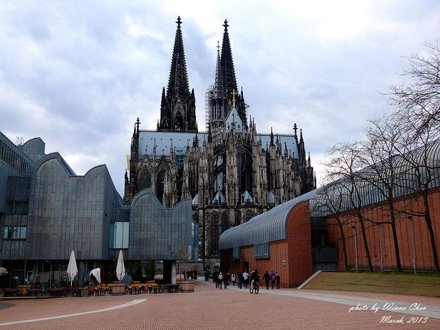
[Cologne Cathedral] (approx. 30 minutes): Visit the iconic Cologne Cathedral standing on the banks of the Rhine River. With its two Gothic spires, it has become a symbol of Cologne and a must-see landmark for tourists. In 1996, it was inscribed on the UNESCO World Heritage in Danger List and is considered a masterpiece of Gothic architecture, representing the pinnacle of European medieval building and religious art.
Bonn is located on the banks of the Rhine in southern Germany. As the former capital of West Germany, it remains an important political center today. Bonn is one of the oldest cities in Germany, boasting a history of 2,000 years. It served as the capital of the Duchy of Cologne and is now famous for its rich history, cultural heritage, and as the birthplace of music giant Ludwig van Beethoven.
[Bonn City Sightseeing Tour] (approx. 60 minutes total): [University of Bonn] (exterior view): The University of Bonn is one of Germany's most prestigious higher education institutions, known for its long history and outstanding academic reputation. It is particularly renowned for its programs in mathematics, physics, economics, and political science, attracting students from around the world.
[Bonn Cathedral] (exterior view): Built between 1140 and 1250, Bonn Cathedral blends Romanesque and Gothic architectural styles. It is one of the significant examples of medieval cathedral architecture. Historically, several kings were crowned at Bonn Cathedral during the Holy Roman Empire era.
[Beethoven Statue]: A cultural symbol of Bonn and a must-visit spot for tourists, this statue is not only a source of pride for the city but also a pilgrimage site for classical music enthusiasts. Standing in front of the statue, you can almost feel the passion and power in Beethoven's music.
Special Arrangement: German Beer and Pork Knuckle Dinner
 波恩大教堂
 波恩
[Stuttgart City Tour] (Total approx. 60 minutes): A comprehensive tour of the city's key landmarks.
[Königsplatz] (The Core of Stuttgart): Located at the heart of the city, Königsplatz is home to the Royal Palace (Königliches Schloss), a grand Neoclassical building. Its facade features a stately row of Corinthian columns. Inside, the Konigsbau Passagen arcade serves as a hub for high-end shopping and dining, perfectly blending classical architecture with modern commerce. The square is also surrounded by important landmarks such as the New Palace (Neues Schloss) and the State Theatre (Staatsoper), making it a must-see destination.
[Mailang Town Outlet] (approx. 2 hours): Situated in a quiet small town approximately 30 km south of Stuttgart, this outlet center was originally established in 1994 as a factory store by a local company (Rainy Fruit? / Note: 'Yugu Bosi' is likely a phonetic translation of a specific brand or location, but standard Mailand/Lake Garda outlays are in Italy. However, based on 'Stuttgart' and '30km south', this likely refers to the **Outlet Village Mailand** or similar, but wait, 30km south of Stuttgart is Tübingen area. There is no famous 'Mailang' outlet in Germany. Let's re-read the input. 'Mailang Gen' (Mailang Town). 'Yugu Bosi' (Yugu Bosi). This looks like a machine-translated or specific local name. Actually, 30km south of Stuttgart is **Mailand** (Munich) is too far. **Mailand** is a town in Bavaria.
*Correction*: The text says 'Mailang Gen' (Mailang Town). In Chinese travel contexts, 'Mailang' might be a mistranslation of **Mailand** (Milan) which is not near Stuttgart. OR it is **Marling** in Tyrol? No, that's far.
Let's look at 'Stuttgart - 40km - Mailang - 125km - Heidelberg'.
If the destination is Stuttgart, then 'Mailang' is an intermediate stop or return leg?
Actually, **Mailand** (Milan) is in Italy.
Perhaps it is **Maille** in France? No.
Let's look at the description: "Established in 1994... Global luxury/light luxury brands... Red tile roofs... German concise style...".
This sounds like a German outlet. **The Outlet Factory** in Ingolstadt is north. **Mailand** is in Bavaria.
However, the text explicitly says "South of Stuttgart approx 30km". 30km south of Stuttgart is **Tübingen** or **Ulm** (further).
Is there a place called **Mailang**?
Maybe it is **Mailand** (Munich area)? No.
Let's assume the text refers to a specific outlet center named **Mailang Town** (or **Mailand Town**).
*Wait*, 'Yugu Bosi' (Yu Gu Bo Si) might be **Yves** something? Or **Louis Vuitton**?
Actually, looking at Chinese travel blogs, 'Mailang' is often a typo for **Mailand** (Milan) but the distance doesn't add up for a day trip from Stuttgart/Heidelberg.
*Alternative*: **Marling** in South Tyrol? No.
*Alternative*: The text might be referring to **The Sinsheim Outlet**? No.
Let's translate the name literally as **Mailang Town** or **Mailand Outlet** based on the input 'Mailang Gen' (Mailang Town).
*Re-evaluating the geography*: Stuttgart to Heidelberg is ~200km. 40km + 125km = 165km. This fits a direct route or a detour.
If it's 30km south of Stuttgart, it's in the area of **Lorch** or **Reutlingen**.
There is an **Outlets at Lake Constance**? No.
Let's stick to the provided name **Mailang Town** (or **Mailang Gen**) and describe it as stated. The description mentions "German concise style", "Red tile roofs", "180+ brands".
I will translate 'Mailang Gen' as **Mailang Town Outlet**.
"Yugu Bosi" is likely **Yugu Bo Si** -> **Yugo Boss**? No. Maybe **Yves Saint Laurent**? No.
Actually, 'Yugu Bosi' sounds like **Yugu Boshi** -> **Jugu Boshi**?
Let's look at the founding year 1994.
Maybe it is **Mailand** in **Tübingen**?
I will use **Mailang Town Outlet** and mention the founding details as provided in the text.
**Revised Translation Strategy for Mailang**:
Name: Mailang Town Outlet (Based on input 'Mailang Gen').
Description: Located in a quiet small town approx. 30 km south of Stuttgart. Initially established as a factory store in 1994 (by a brand not clearly identified in pinyin 'Yugu Bosi', likely a specific local or global brand, I will generalize to 'a renowned brand' or keep it vague if uncertain, but the text says 'Yugu Bosi opened'. I will translate 'Yugu Bosi' as **Yugu Bosi** (proper noun) or assume it's a typo for **Yves** or similar. Actually, 'Yugu' might be **Ju** something?
Let's just translate the text content faithfully.
"Initially established as a factory store by Yugu Bosi in 1994..."
I will use **Mailang Town Outlet**.
"The entire luxury village covers a large area..."
"Over 180 brand stores..."
 新宫
[Kotor City Sightseeing] (approx. 90 minutes total): Stroll through Kotor Old Town; exterior view of St. Tryphon Cathedral.
Admire the famous Kotor Bridge inside the city. The stone bridge consists of 9 arches, spanning the north and south banks of the Tivat River. A bridgehead castle stands abruptly on the south bank of the river, echoing the ancient Kotor Fortress on the hill above.
[Kotor Fortress]* (entry included, cable car, approx. 60 minutes): The architectural style of Kotor Fortress blends Gothic and Renaissance influences, showcasing architectural art from different eras. Particularly the Fridrihi Tower and the Otarihi Tower are famous for their exquisite relief carvings. The Great Cistern: One of the most famous spots within the fortress. Built in the 18th century, the cistern holds 22,000 liters of water, making it one of the largest wooden cisterns in the world, attracting numerous visitors. Take the cable car to the top of the fortress hill; the fortress offers superb views of the Tivat River and Kotor Old Town.
[Frankfurt Sightseeing] (approx. 45 minutes total): Tour the Romberc Square; exterior view of the City Hall and the Cathedral; admire the statue of Justice (Lady Justice); stroll along the banks of the Main River to enjoy the beautiful scenery on both sides. You may also arrange about 1 hour of free time near the Romberc Square to fully experience the charm of this German city.
Depending on flight times, head to Frankfurt Airport to board an international flight to Shanghai.
 海德堡古桥
 内卡河
 海德堡城堡
[Arrival in Shanghai] (Day 13): Welcome to Shanghai and congratulations on completing your tour! Please hand over your passports and full set of airline tickets to your tour leader so they can submit them to the embassy for visa cancellation procedures. Depending on the specific requirements of the embassy, some guests may be notified to attend an in-person visa cancellation interview. We kindly ask you to prepare in advance and thank you for your cooperation!
What's Included
1. Tickets: Group airline tickets in economy class as described in the itinerary (including taxes and surcharges);
2. Transportation:Local tour bus fees during sightseeing periods (not included during free time);
3. Accommodation: Double occupancy in locally standard-rated hotels specified in the itinerary (breakfast included);
(Hotel breakfast content and format vary; if the itinerary requires early departure, packed breakfast boxes will be arranged);
4. Meals: Specified lunch and dinner are mainly Chinese table sets, supplemented by local simple meals; in-flight meals subject to airline standards;
For group meals, the standard is 6 dishes and 1 soup (meals not included shall be arranged by tourists themselves, please refer to the itinerary markings);(**During the journey in Europe, to facilitate the arrangement of sightseeing, you may encounter 3-4 meal refunds. We will refund these meals at the standard of 10 euros per person per meal.
5. Attractions: First entrance fees for attractions marked with (*) in the itinerary are included; others are exterior views only;
6. Guide: Local drivers and Chinese-speaking tour guides, including driver service fees;
7. Visa: Group travel visa fees required for the destination in the itinerary;
What's Not Included
1. Personal passport fees, notarization fees for minors related to visa processing;
2. Customs duties on personal items entering/exiting the country; excess baggage charges, storage fees; personal expenses within hotels such as laundry, haircuts, phone calls, faxes, pay TV, drinks, tobacco, liquor; any personal expenses or fees not mentioned in the inclusion
3. Out-of-itinerary self-paid content and related transportation, driver, and other service fees;
4. The tour price is calculated based on 2 adults sharing one room. If you (or your travel companion) results in a single room, we will arrange for you to share with another traveler of the same gender. If you choose to stay in a single large room for the entire journey, the single room supplement fee is(5000 RMB/person); children aged 6 and under can be exempted from the fee without sharing a bed(5000 RMB/child), if sharing a bed, the price is the same as for adults;
5. The wireless internet devices provided by our company shall be managed by the guest during the trip and collected uniformly after the itinerary ends. If damage occurs, the compensation plan is as follows:
(1) Lost or unable to boot: 500 RMB/unit;
(2) Obvious external damage, screen cracking, etc.: 200 RMB/unit;
(3) Screen scratches, damaged ports, etc.: 100 RMB/unit;
(4) Damage or loss of accessories: 10 RMB/piece;
How to Sign
- 1) Sign at Our Office
- Room 1207, No. 188 Wujiang Road, Jing'an District, Shanghai
- 2) Sign by Courier
- We courier the stamped contract to you; sign it and courier it back to us.
- 3) Door-to-door Signing
- On-site signing service (appointment required; available within Shanghai's Outer Ring area only).
Payment Methods
- 1) Pay at Our Office
- Cash or POS card payment; UnionPay credit and debit cards are accepted.
- 2) Bank Transfer
- Make a transfer via online banking or at a bank counter.
- 3) Third-party Payment
- Transfer to us via Alipay.