

Depending on your flight's departure time, please arrive at the airport in advance to complete check-in procedures and begin your enjoyable journey!
It is Germany’s highest peak. Under clear skies, you can enjoy a 360-degree unobstructed view spanning the Alps across Germany, Austria, Switzerland, and Italy, as well as snowboarding all year round! This is the Zugspitze, located in the Tyrolean region at the border between Austria and Germany.
[Munich] (visit for at least 1 hour 30 minutes): Munich is the capital of the state of Bavaria in Germany. Located on the banks of the Isar River on the northern slopes of the Bavarian Alps in southern Germany, it is one of Germany’s primary hubs for economy, culture, technology, and transportation. Munich retains the rustic charm of the old Bavarian capital, earning it the nickname 'Village of a Hundred People.'
[Munich New City Hall (exterior)]: Built in the 19th century, this grand and majestic Gothic building features vertical lines that enhance its solemnity, with snow-like white accents on top. Statues of medieval kings, saints, and legendary heroes adorn its facades. The building boasts a majestic layout and exquisite decorations. The clock tower of the New City Hall is the highest structure in the old city, exceeding only the St. Michael’s Church. The clock's 'Glockenspiel' is one of the four largest automata in Europe and is world-renowned.
[Munich Royal Palace (exterior)] (visit for at least 1 hour): Located in the city center, this area is a concentration of Munich’s most important buildings from the 16th to 19th centuries. The Munich Palace District includes multiple structures such as the Kings’ Hall, the Maximilianeum, the Banquet Hall, the Bavarian National Opera, and the General’s Memorial.
[Zugspitze (indoor access)] (visit for at least 2 hours 30 minutes, including round-trip cable cars): The Zugspitze stands at 2,962 meters in elevation. Situated on the border between Germany and Austria in the Alpine range, it is home to the composition of Richard Strauss’s famous 'Also sprach Zarathustra' (often referred to as the Alpine Rhapsody or associated with the mountain). The itinerary includes riding a scenic rail car up to the 2,600-meter-high ice plateau, then taking an ice plateau shuttle car to the summit. From the peak, you can take in a panoramic view of the thousands of Alpine peaks across Germany, Austria, Italy, and Switzerland.
 慕尼黑皇宫区
 慕尼黑王宫
It is the only palace completed by a reigning king. Kaiser Wilhelm II, driven by a strong pursuit of eccentric and complex Rococo style mixed with Oriental colors, created this jewel among Rococo architecture: a majestic palace hidden in a valley.
[New天鹅 Castle] (approx. 1 hour, entry included): New天鹅 Castle is the prototype of Disney's Castle and a symbol of Germany. It was commissioned by King Ludwig II of Bavaria in the 19th century. This king, who called himself the 'Swan Knight,' dreamed of building a fairy-tale world and personally designed the castle, which is filled with numerous German swan sculptures. The white castle stands proudly on a high mountain, surrounded by hills and lakes, offering breathtaking scenery in all four seasons. (Please note that due to flow control, entry may be restricted; if so, a refund or change to another attraction may be arranged.)
[Linderhof Palace] (approx. 1 hour, entry included): Nestled in the Alpine valley, Linderhof Palace features Rococo style influenced by the Italian Renaissance, with its sloping terraces, steps, gardens, and courtyards, plus English-style gardens, creating a highly attractive structure. The interior furnishings, such as the King's bedroom, are more lavish than anything found in the Palace of Versailles. Other areas, including the Hall of Mirrors with its exquisite cornices and countless sculptures and paintings, are equally magnificent.
[Rothenburg] (approx. 1.5 hours): Rothenburg, famous as the 'Pearl of the Middle Ages,' preserves intact medieval streets, residences, castles, towers, cobblestones, fountains, and marketplaces. It feels like stepping back in time to the romantic era of the European Middle Ages. Strolling through the ancient streets and winding alleys, with a clock tower at every corner, you are immersed in history. Visit the distinctive Pflanzgarten (Plant Garden), the medieval-style Marienberg Gate (Mary's Mount), and then proceed to the Rothenburg Market Square to admire the legendary colorful Town Hall.
[Rothenburg City Hall] (City Hall Square): The square features Renaissance architectural styles, while the rear retains the original 13th-century Gothic style with a unique two-story structure. Inside, there is a historical exhibition hall, and visitors can climb the high tower to enjoy panoramic views of the old city.
[Rothenburg Market Square] (Market Square): As the center of Rothenburg, the square is dominated by a striking Renaissance fountain adorned with saints. It is surrounded by elegant, noble houses that bear witness to their prominent place in history.
 罗滕堡
 新天鹅堡
Starting point of the German Romantic Road and a UNESCO World Heritage city on the Main River. The stunning Baroque frescoes of the Wuerzburg Residence and the ornate halls of the Wuerzburg Palace unfold before you, offering a glimpse into the noble history of Bavaria.
[Würzburg] (at least 2 hours): Located on the banks of the Main River, which flows through the old town. The river features a 15th-century old bridge and the riverbank is lined with castle bastions, creating Würzburg's classic landscape.
[Würzburg Residence] Exterior, Cultural Heritage: Inscribed on the UNESCO World Heritage List in 1981. Built in the 18th century and surrounded by colorful gardens, this magnificent Baroque palace served as the residence of the Prince-Bishop and Grand Duke. It is considered one of the largest and most beautiful palaces in Germany.
[Würzburg Old Town City Hall] Exterior: The older section of Würzburg's city hall building is situated between the main cathedral and the old Main Bridge. This red brick building features a 55-meter-tall tower adorned with ancient decorations. Construction began in 1180, giving it a history of over 800 years. The actual administrative city hall is located in the building behind this historic tower.
罗滕堡
 老市政厅
Exterior of the Grand Theatre: Admire the opulent interior features visible from outside, including layered and ornately decorated wooden box seats, dreamily colorful murals, and wooden pillars and stair railings with a marble texture. Every detail exudes the magnificent Baroque grandeur that makes this venue truly astonishing. It was inscribed on the UNESCO World Heritage List in 2012.
[Bayreuth] (Sightseeing not less than 1 hour): Water is the soul of a city, and it is precisely the water that makes Bayreuth even more charming, earning it the nickname “Little Venice on the Pegnitz.” Bayreuth boasts a history of over a thousand years. It has served as a residence for Holy Roman Emperors and Bishops and is the largest historic city area in Germany to remain undamaged by war.
[Bayreuth Old Town]: A historic city area in Germany that has never suffered war damage. It has been included in the UNESCO World Cultural Heritage List since 1993 because it uniquely represents a central European city that developed from its early medieval basic structure.
[Cathedral of the Holy Spirit] Exterior: The principal church of the Catholic Archdiocese of Bamberg, located in the northern part of Bavaria, Germany. Founded in 1004, the current cathedral was completed in the 13th century. It is a Romanesque-style building featuring four stately towers.
[Bayreuth] (Sightseeing not less than 1 hour): The residence of the composer Richard Wagner. Bayreuth is also a ducal city. The Duchess of Saxe-Weimar residing here at the time was one of the most influential women in 18th-century Germany. She transformed the city into a brilliant cultural capital, showcasing her attitude towards life and her passion for the arts.
[Neues Schloss, Bayreuth] Interior: Built in 1753, this elegant building was designed and constructed by Joseph Emanuel Fischer von Erlach for Margravine Friederike Sophie Wilhelmine of Brandenburg-Bayreuth and her husband, Duke Friedrich of Brandenburg-Bayreuth. It features a Baroque exterior and Rococo-style interiors. Since the old palace where the Duke and Duchess of Bayreuth resided was burned down, this new palace became the ducal administrative seat, residence, and political center of the Duchy of Bayreuth.
[Margravial Opera House, Bayreuth] Interior (Sightseeing not less than 1 hour): The Margravial Opera House in Bayreuth is one of the most exquisite Baroque theaters in Europe. Its opulent interior is adorned with reliefs on all sides and gilded columns, while the exterior is equally graceful. It was the Duchess’s favorite and most splendid leisure venue.
 纽伦堡
 维尔茨堡
[Nuremberg] (Minimum 1 hour): The second-largest city in Bavaria and the birthplace of the international corporation Siemens. The city exudes a thick historical atmosphere and was once Germany's toy manufacturing hub, earning it the nickname “Toy Capital of Europe.” It is said that medieval kings would hold court here, and Hitler even established his headquarters in Nuremberg. It is also the hometown of the famous sportswear brand Adidas.
[Nuremberg Cathedral] (Exterior): Charlemagne built this cathedral to safeguard his treasure from thieves. Above the entrance stands a Michael’s choir loft, and beneath the large clock are statues of seven electors. When the clock strikes 12 noon, wooden dummies emerge and dance around.
[Dresden] (Minimum 1.5 hours): Historically the capital of the Kingdom of Saxony, Dresden boasts several centuries of prosperity and a flourishing cultural and artistic heritage. The city features high green coverage and numerous exquisite Baroque buildings, earning it a reputation as one of Europe's most beautiful cities, often referred to as “Florence on the Elbe.”
[Dresden Cathedral] (Exterior): The construction of the Dresden Cathedral began in 1726 and took 17 years to complete. It employs unprecedented architectural features such as a circular dome and sandstone masonry. The cathedral stands 95 meters high; its massive and elegant structure is a representative work of Western Rococo architecture, a landmark of this old city and one of Dresden's most scenic sights. Many musical and artistic masters have left their footprints here.
[Briitzer Terrace]: The Briitzer Terrace is renowned for its magnificent open-air staircase, making it an ideal spot for leisurely strolls and coffee breaks. It is affectionately known as “Europe's Balcony.”
[Zwinger] (Interior, Minimum 1 hour): (Closed on Mondays). The Zwinger Palace is the crowning masterpiece of architect Balthasar Neumann, constructed in phases between 1710 and 1728. To decorate this building, numerous sculptors created an unprecedented amount of sculptures, which remain one of the important landmarks in Dresden, the capital of Saxony.
 德累斯顿圣母教堂
 茨温格宫
Nicknamed "Little Paris," this city is rich with musical ambiance and stands as a vital witness to German history. It is the city of Baroque music, Goethe's beloved place, and a key starting point in the unification of East and West Germany.
[Leipzig] Coach Tour (approx. 1 hour 30 minutes): Leipzig is the second-largest city in eastern Germany. The name locally means "place with linden trees." The great poet Goethe loved this city deeply, calling it "Little Paris." It is a world-renowned exhibition, book, and music city, hosting international exhibitions every spring and autumn.
[Leipzig Town Hall] Exterior View: Also serving as the city's historical museum, one of its most famous buildings is located right in the center of Old Town Square.
 历史博物馆
 柏林
Whether it is the depth of history or the vibrancy of the modern era, Berlin always presents an astonishing side of itself to the world. Perhaps you have never visited Berlin, or perhaps you are a repeat guest; but the moment you step into this captivating city for the first time or return, its profound charm will envelop you, immersing you in its atmosphere.
[Berlin] (at least 3 hours): Berlin is the capital of Germany, with a highly developed economy and rich cultural scene. Here, we can experience the bustling glamour of a European metropolis and relive the glittering history of major European events.
[Berlin Wall Site]: When East Germany built the Berlin Wall, it required a massive investment of manpower, material, and financial resources. Today, the surviving sections of the wall are adorned with graffiti works by 181 artists from around the world. A particularly striking piece is the depiction of Yonas (Emperor) and Trotsky’s handshake.
[Exterior of Berlin Cathedral]: This Protestant church served as the imperial church of the House of Hohenzollern. The architectural style combines Baroque and Neoclassical elements. The interior is extremely opulent, dominated by a white and gold color scheme, though only a few rooms are open to the public. The underground level houses the royal crypt. The most precious tombs here belong to the Emperor and Empress Frederick I and Queen Victoria, containing a pair of walnut coffins that are priceless.
[Museum Island]: This is a small island that brings together five museums, built between 1824 and 1930. Due to its cultural and architectural significance, it was designated a UNESCO World Heritage Site in 1999. The five museums are: the Old National Gallery and the adjacent New National Gallery, the National Gallery, the Bode Museum, and the Pergamon Museum, which together form Berlin's renowned Museum Island.
[Pergamon Museum] (Interior, at least 1 hour): Built in 1930, the Pergamon Museum is the most modern building on Museum Island. It exhibits ancient Greek and Roman sculptures, as well as 6,000 years of Middle Eastern history, art, and culture (Middle East Museum) and Islamic art from the 8th to 19th centuries (Islamic Art Museum).
[Brandenburg Gate]: Also known as the Gate of Fortune, this sandstone building in Neoclassical style was built in 1791. It stands as a historical witness to the division of East and West Germany, a symbol of Berlin, and a national emblem of Germany. Modeled after the Propylaea of the Acropolis in Athens, the gate features a quadriga sculpture on top, depicting a victory goddess with wings spread driving a chariot drawn by four horses, symbolizing the victory of war. After the fall of the Berlin Wall in 1989, it became a symbol of the unification of the two Germanys.
 博物馆岛
 柏林大教堂
[Potsdam] (minimum 1 hour): What truly captivates visitors is not the palace itself, but rather the six figure-eight shaped terraces in the center of the palace and the six pathways on either side. Every terrace and pathway is lined with stone walls covered in grapevines, layer upon layer, row after row. Viewing the palace from the slopes offers a truly unique perspective. Step inside this special palace and experience the carefree tranquility it provides!
[Potsdam Square] (no time limit): Potsdam Square serves as the new center of Cologne, adjacent to the Trankaport (Trankaport) Gate and named after the former Cologne city gate, the Potsdam Gate. It functions as a major transportation hub and commercial center of the city.
[Sanssouci Palace Interior] (minimum 1 hour, includes audioguide): In 1990, UNESCO World Heritage Committee inscribed the Sanssouci Palace and its expansive gardens on the World Heritage List. Designated as a Prussian Versailles, it is a composite of 18th-century European art movements, blending architectural creativity and landscape design characteristic of the absolute monarchy era. Note: If Sanssouci Palace is closed for the week or entry is restricted due to crowd control, this visit will be replaced by an exterior view of the palace, and a refund of €14 per person will be issued.
[Hamburg] (minimum 1.5 hours): Located in northern Germany, Hamburg is the country’s second-largest city and a crucial port, trade, and financial hub. Nicknamed the “Bridge to the World,” it is a vital transportation nexus in northern Germany and one of Europe’s wealthiest cities. Hamburg has also emerged as Germany’s hub for news media and industrial manufacturing. As a major global port, it is often regarded as “Germany’s gateway to the world.”
[Hamburg Port] (no time limit): Situated at the confluence of the lower Elbe, Alster, and Bille rivers, the Port of Hamburg is one of Germany’s largest ports and a key transshipment hub in Europe. It is also one of the largest container ports in the world, equipped with dozens of container quays and more than 30 cranes. You can take a leisurely boat cruise through the city’s waterways or stroll along the banks of the Elbe. Interpretive signs along the waterfront offer insights into the past and future of the harbor between Landungsbrücken and Noa Miller.
 波茨坦广场
 勃兰登堡门
Braunschweig, famous worldwide for its connection to the Grimms' Fairy Tales, is much more than just a tale. It is a hidden gem that blends toughness and tenderness, serving as a travel destination that exudes a fairytale atmosphere. Once you visit, no matter how much time has passed, its image will linger in your memory, flowing through time; every brick and tile seems to radiate this charm.
[Braunschweig] (approx. 1.5 hours): Braunschweig is Germany's 10th largest city and the smallest federal state—the State of Braunschweig—ranking second in Germany in terms of government spending and gross domestic product. The city is renowned as the "Fairy Tale City." The folk tale The Town Musicians of Bremen was recorded and included in Grimms' Fairy Tales by the Brothers Grimm in 1857. Revival-style architecture can be seen everywhere. The River Wuhne is considered the mother river of Braunschweig, flowing right through the city center.
[Braunschweig City Hall] (Exterior): One of Europe's most significant Gothic buildings, the Braunschweig City Hall was inscribed on the UNESCO World Heritage List in 2004 together with the Braunschweig Roland statue. Today, it serves as the residence of the city's mayor and the chairman of the city council. The 40-meter-long town hall great hall is considered one of the most beautiful celebration halls in Germany.
[Braunschweig Cathedral] (Exterior): With a history spanning 1,200 years, this cathedral incorporates various architectural styles. Early Gothic elements date back to the first half of the 13th century. The oldest part is the cathedral's underground chapel, where the most striking feature is the stone-vaulted ceiling. There are open oak beams from which eight wind pipes hang within the vault.
["Town Musicians of Braunschweig" Statue]: This sculpture depicts the four protagonists from the fairy tale The Town Musicians of Bremen, arranged from top to bottom: the rooster, the cat, the dog, and the donkey. Many visitors rub the donkey's nose and front legs for good luck, which is why these two parts are now polished to a shiny finish.
[Hamelin] (approx. 1 hour): Hamelin is one of the most important cities along Germany's Fairy Tale Road. The legend of the Pied Piper of Hamelin originated in this very city.
[Home of the Hamelin Piper] (Exterior): In our childhood memories, we might not even know the name of this city or where it is located, but we certainly remember the story of the piper who lured rats out of town with music. The piper eventually used his enchanting tunes to lead all the town's children away, leaving no trace. This city is Hamelin, the backdrop for the famous story from Grimms' Fairy Tales where the Piper of Hamelin drove away rats with a single pipe. This is the historical setting of that well-known legend.
 卡塞尔
 哈默尔恩
Opening Remarks: "Begins with the Great Church, ends with the Great Church." Cologne is one of the "Two Great Churches of the North," and everyone knows this city has three iconic symbols: the Carnival Festival, Kólor beer, and the Great Church (Cologne Cathedral). Regarded as the most perfect example of Gothic architecture, combining grandeur and intricacy, the Great Church is still one of the tallest churches in the world today.
[Karlsruhe] (min. 1 hour): Located in northern Baden-Württemberg, Germany, this large city sits in a basin surrounded by mountains, offering pleasant scenery and considered one of Germany's most beautiful cities. It is also the birthplace of the famous fairy tales of the Brothers Grimm. The city's dense collection of cultural relics and rich museums attracts a large number of tourists.
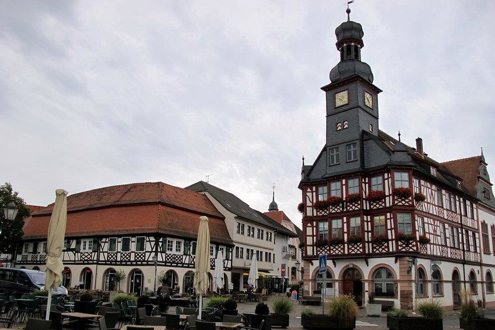
[Armsfeld] (min. 1 hour): The charming town of Armsfeld is not only a stop on the German Fairy Tale Trail but also a highlight on the German Timber-Framed Architecture Trail. Here, there are no cliché scenic spots for check-ins, only the flowing years woven into wood grain and fairy-tale echoes lingering at street corners. The exquisite fairy-tale cottages, the Renaissance-style Town Hall, and the city square are unmissable spots.
[Cologne] (min. 1 hour): The fourth-largest city in Germany, famous for its heavy industry. Besides the world-renowned Cologne Cathedral, it is home to the world's oldest eau de cologne, 4711, making it one of Germany's most famous tourist destinations.
[Cologne Cathedral Interior] (min. 1 hour): An iconic building in Cologne, the Cathedral stands second in height in Germany and third in the world, and is the largest church in Northern Europe. Renowned for its lightness and elegance, it is one of the three great Gothic cathedrals in the world and a UNESCO World Heritage Site. Inside, it houses the largest medieval German church altar, and even the cross on the altar is a masterpiece among European large-scale sculptures. It is known alongside Chartres Cathedral in France and Salisbury Cathedral in the UK as one of Europe's three great religious buildings.
[Cologne Town Hall Exterior]: Located between the Town Hall Square and the old city center in Cologne, the Town Hall has a history of over 900 years. Destroyed during WWII, it was rebuilt after the war. The current complex blends multiple architectural styles; the Town Hall dating back to the 14th century, the Gothic tower from the 15th century, and the exquisite Renaissance-style gallery from the 16th century are all well worth a visit.
 科隆市政厅
 科隆大教堂
Bonn] (approx. 1 hour): During the division of Germany, Bonn served as the capital of the Federal Republic. The clear Rhine River flows gently along the city's edge, transforming this quiet and harmonious town into a hub where former government quarters have been repurposed as offices for United Nations agencies and major German corporate headquarters.
Bethovengo - Beethoven's Former Residence] (approx. 1 hour, Guided Tour Included): Located in the heart of Bonn, Beethoven's birthplace is a holy land for music lovers worldwide. It is the only well-preserved residential building of the Beethoven family. The museum features 150 original exhibits reflecting his work and life, including his famous portrait and the last piano he used.
KD Rhine River Cruise] (approx. 1 hour, 2nd Class Ticket Included): A cruise through the UNESCO World Heritage Upper Middle Rhine Valley. Both banks are lined with vineyards and medieval castles that stand in contrast, passing through the legendary Lorelei rock. Embark on the sightseeing ferry to view the river valley panorama, with the option to board or disembark at different stops to explore picturesque Rhine towns. Experience the German romantic landscape and thousand-year history. Please note: If the Rhine River cruise is suspended due to low water levels, a refund of 10 euros per person will be issued.
 贝多芬故居
 贝多芬故居
It is a miniature of the romantic German countryside, where winding and quiet alleyways connect the castle and the stream, creating an atmosphere that evokes a 'poetic scene.' Although the old town has been thoroughly modernized, the main streets, alleys, and key buildings have retained their original rustic charm.
[Heidelberg] (at least 1 hour): Situated along the banks of the Neckar River, between Stuttgart and Frankfurt, it is a vibrant blend of tradition and modernity, featuring both romantic colors and pastoral landscapes, as well as an international vibe and medieval ambiance. It is a favorite among many writers and scholars; the poet Goethe said he 'lost his heart in Heidelberg,' and Mark Twain called it 'the loveliest place I have ever been.'
[Heidelberg Castle] (at least 1 hour): An icon of Heidelberg, the castle stands atop the Königstuhl mountain. Below it lies the old town and the Neckar River. It is the remains of an electoral palace, first built in the 13th century and completed after 400 years of construction. Its architectural style is a unique blend of Gothic, Baroque, and Renaissance, serving as a masterpiece of German Renaissance architecture.
[Metzingen OUTLETCITY] (at least 2 hours): A famous German outlet—the Metzingen Luxury Brand Village—welcomes 3.5 million tourists from around the world annually. It is the hometown of the international brand Hugo Boss and houses more than 60 top-tier international luxury brands, including Armani, Bally, Burberry, and Coach. With its consistently impressive discounts, it is an excellent place to purchase European luxury goods at affordable prices.
 内卡河
 海德堡城堡
[Stuttgart] (visit duration not less than 30 min): Situated in the hometown of racing, Stuttgart is a palace-like museum dedicated to the inventor of the automobile. The building features a futuristic double-spiral Miroslav design. Take the elevator to the top floor and stroll down the slope, walking a one-way loop to immerse yourself in tracing the century-old automobile industry legend.
Stuttgart gets its name from the German word 'Stutengarten' (horse stable). In ancient times, this was the breeding ground for the horses of princes and nobles. Today, it stands as one of Europe's most economically developed cities with high GDP per capita. The world-renowned 'racing' cars roll off the production line right here.
[Mercedes-Benz Museum] (Visit, duration not less than 1 hour, Audio Guide Included): Among the 160 display vehicles in the museum, there are no shortage of legends like the 1950s Gullwing and Silver Arrow. It is not just a museum but a miraculous architectural marvel and a paradise for every car enthusiast. This is a must-see destination for any tourist visiting Stuttgart. Please note: If the museum is closed on Mondays, we will change to visit the Porsche Factory instead. Please understand.
[Frankfurt] (visit duration not less than 1 hour 30 min): Officially known as Frankfurt am Main, it is known as the 'Holy Land of the Rhine' and 'Germany's Largest Library'. It is not only a major commercial, financial, and transportation hub for Germany and even Europe, but also a renowned cultural city. This is also the hometown of world-famous German literature.
[Frankfurt Cathedral] (Exterior View): With a history of over 600 years, it is also called the Imperial Cathedral because ten German emperors held their coronation ceremonies here during the Holy Roman Empire period. For this reason, it has become the first stop for any Frankfurt trip.
[Frankfurt Old Town Hall] (Exterior View): Located at the northwest corner of the Romanerberg Square, it consists of three rebuilt 15th-century H-shaped buildings. These three elegant connected Gothic buildings feature uniquely distinctive stepped gable roofs. Although they suffered destruction from centuries of war, they have been perfectly restored after renovation and can be considered a symbol of Frankfurt.
 法兰克福大教堂
 法兰克福大教堂
Consular Office Regulation: All group members are required to submit their full set of boarding passes and original passports to the consulate/embassy upon return to their home country for visa cancellation. Please note that the cancellation process typically takes 1-2 working weeks; passports will be returned only after the cancellation is completed.
What's Included
1. Airfare: Group economy tickets for the round trip to the destination from Shanghai, including airport taxes and fuel surcharges. No refunds or changes after ticketing;
2. Accommodation: Reference hotels as listed in the itinerary (European hotels do not have official star ratings; the star rating of the hotels listed in the itinerary is based on BOOKING or Trip.com ratings. In case of exhibitions/peak seasons/local holidays or other force majeure events causing hotel unavailability, adjustments will be made to equivalent-tier hotels with no lower rating). Standard is double occupancy, European-style breakfast included;
3. Meals: Breakfasts and dinners as noted in the itinerary (Includes specialty meals: Tönisvorst brewery roasted beef, three-course Bratwurst, three-course pork, Italian three-course). Dinners are selected Chinese cuisine (6 dishes and 1 soup), arranged for 8-10 people per table or according to restaurant table availability. If Chinese cuisine cannot be arranged, local meals or a meal refund (€15/person/meal) will be provided. If meals are voluntarily waived, no refund will be issued. If the whole group agrees to switch to local cuisine, the regular group meal fee will not be refunded;
4. Transportation: Overseas tour bus with a professional foreign language driver;
5. Admission Tickets: Round-trip shuttle for Zugspitze, Neuschwanstein Castle, Linderhof Palace, Bavarian State Opera, Zwinger Palace, Pergamon Museum, Wüstenrot Castle (includes audio guide), Cologne Cathedral, Bitburg Old Residence (includes audio guide), Rhine River cruise, Heidelberg Castle, and Autostadt (includes audio guide). Please refer to the attached itinerary for detailed listed attractions (other attractions are free-entry public sites or external views or paid optional items);
6. Visa: Schengen visa application fee;
7. Insurance: Overseas travel insurance covering 300,000 RMB per person (ages 75 and below);
8. Wi-Fi Device: Mobile Wi-Fi product allows 2 people per device (mobile phones recommended; connecting other devices may affect speed; not available in some countries or regions, please understand);
9. Includes 300 RMB per person for the full tour guide service fee.
What's Not Included
1. Special senior insurance fees for travelers aged 75 and above (please purchase based on your health condition and sign a health pledge letter and a consent form from relatives for participation in the trip);
2. Single Room Supplement: Additional fee of 6,200 RMB/room for single occupancy.
Note: The single room supplement only applies to standard single rooms (if a group member requests a large bed single room or a single person in a double room, the supplement must be booked separately);
**Room assignments are arranged based on the order of group member registration. If a group member does not accept this arrangement, or if arrangements cannot be made after coordination, or if there are unpaired single males/females with no same-gender group members to share with, the single room supplement must be paid before departure to stay in a single room;
3. Costs for activities not included in the itinerary or not mentioned, such as special admission tickets, special transportation, or private expenses within the hotel.
How to Sign
- 1) Sign at Our Office
- Room 1207, No. 188 Wujiang Road, Jing'an District, Shanghai
- 2) Sign by Courier
- We courier the stamped contract to you; sign it and courier it back to us.
- 3) Door-to-door Signing
- On-site signing service (appointment required; available within Shanghai's Outer Ring area only).
Payment Methods
- 1) Pay at Our Office
- Cash or POS card payment; UnionPay credit and debit cards are accepted.
- 2) Bank Transfer
- Make a transfer via online banking or at a bank counter.
- 3) Third-party Payment
- Transfer to us via Alipay.